Discrete Saturation Engine
Orpheus Zeus
A dedicated dual-stage saturation engine modeling discrete input and output circuit topologies. Anchored directly to physical 610 circuit impedance.
Physical Circuit Loading Across Discrete Topologies
Dual-Stage Saturation Architecture
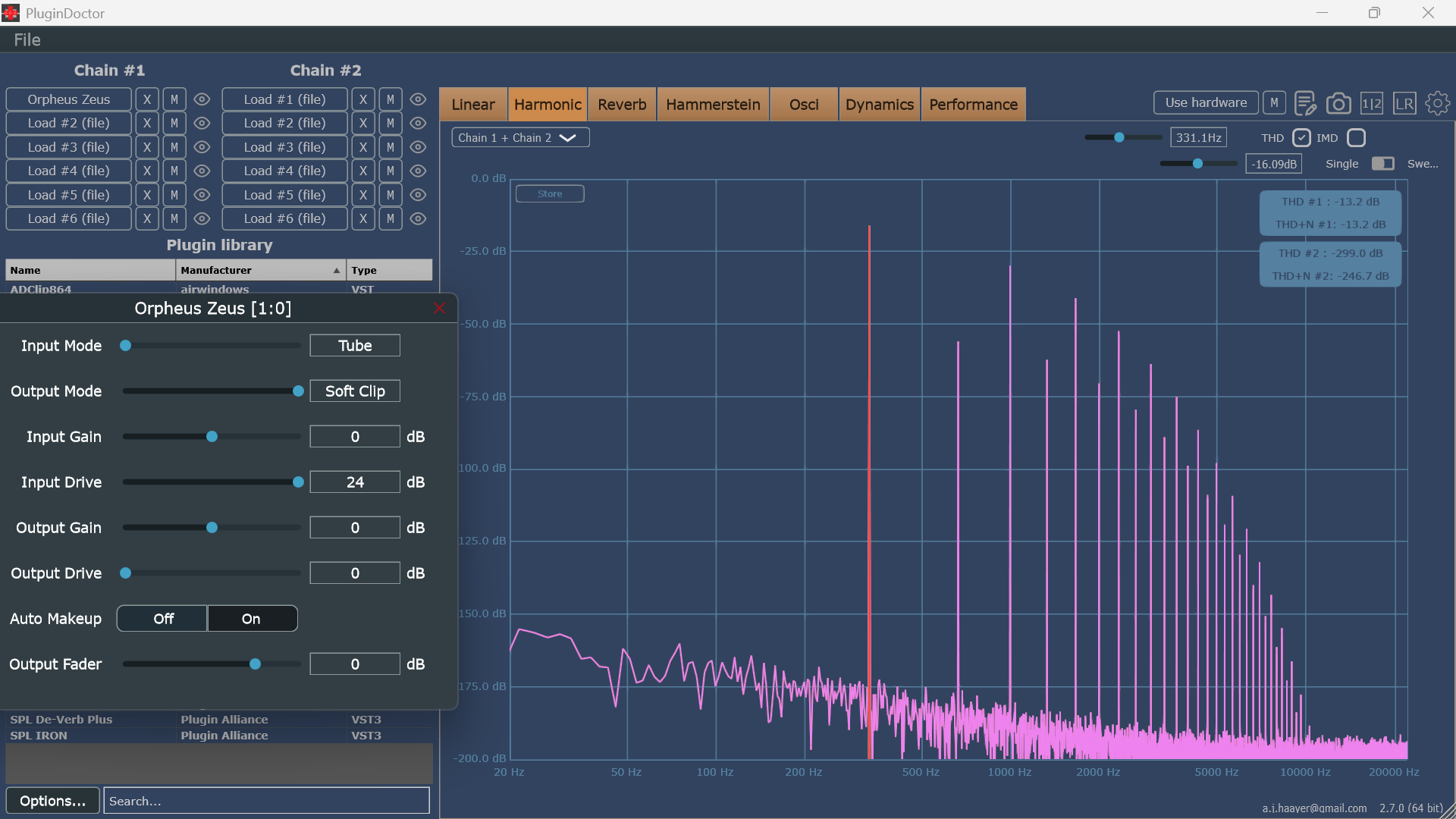
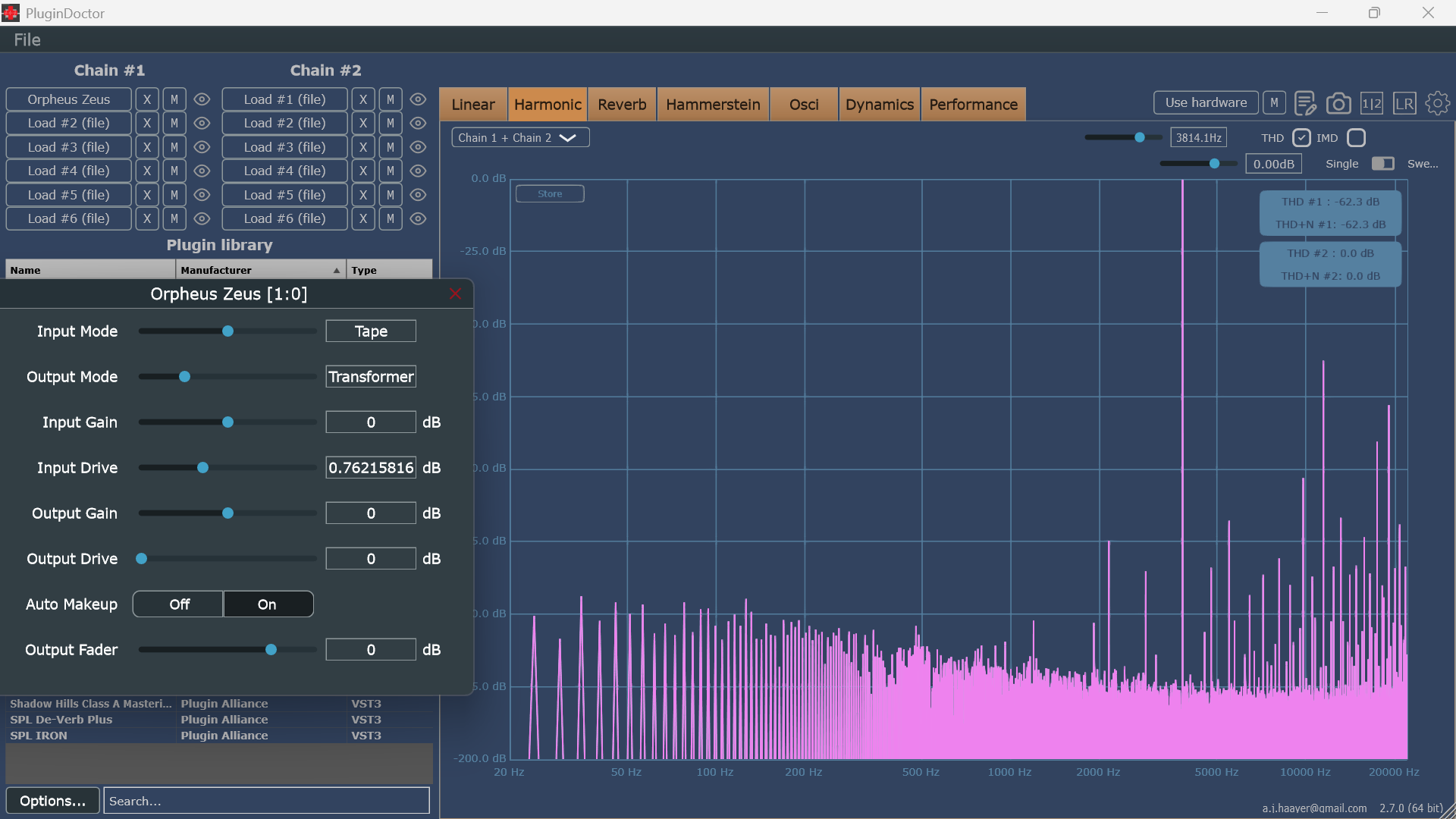
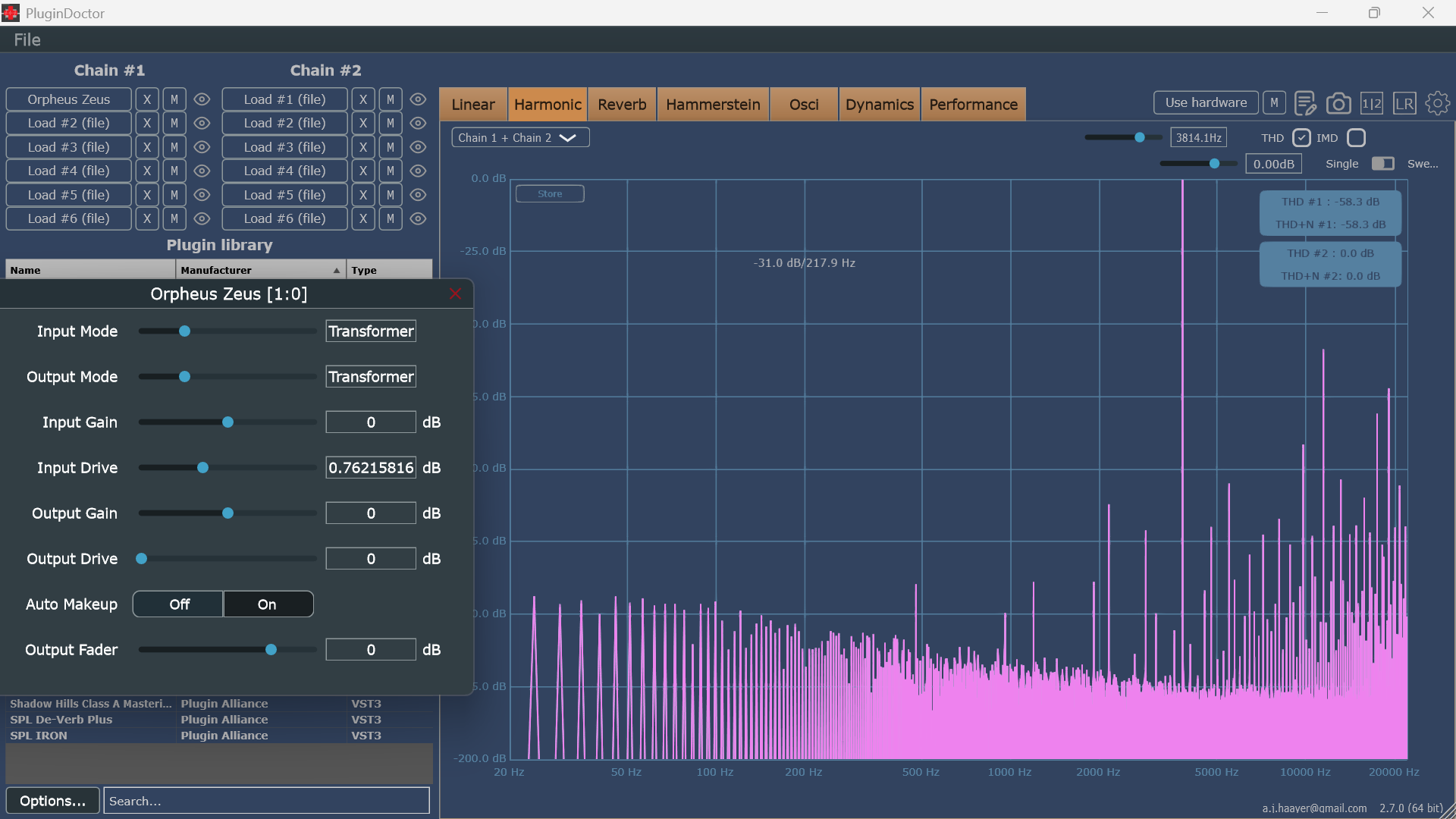
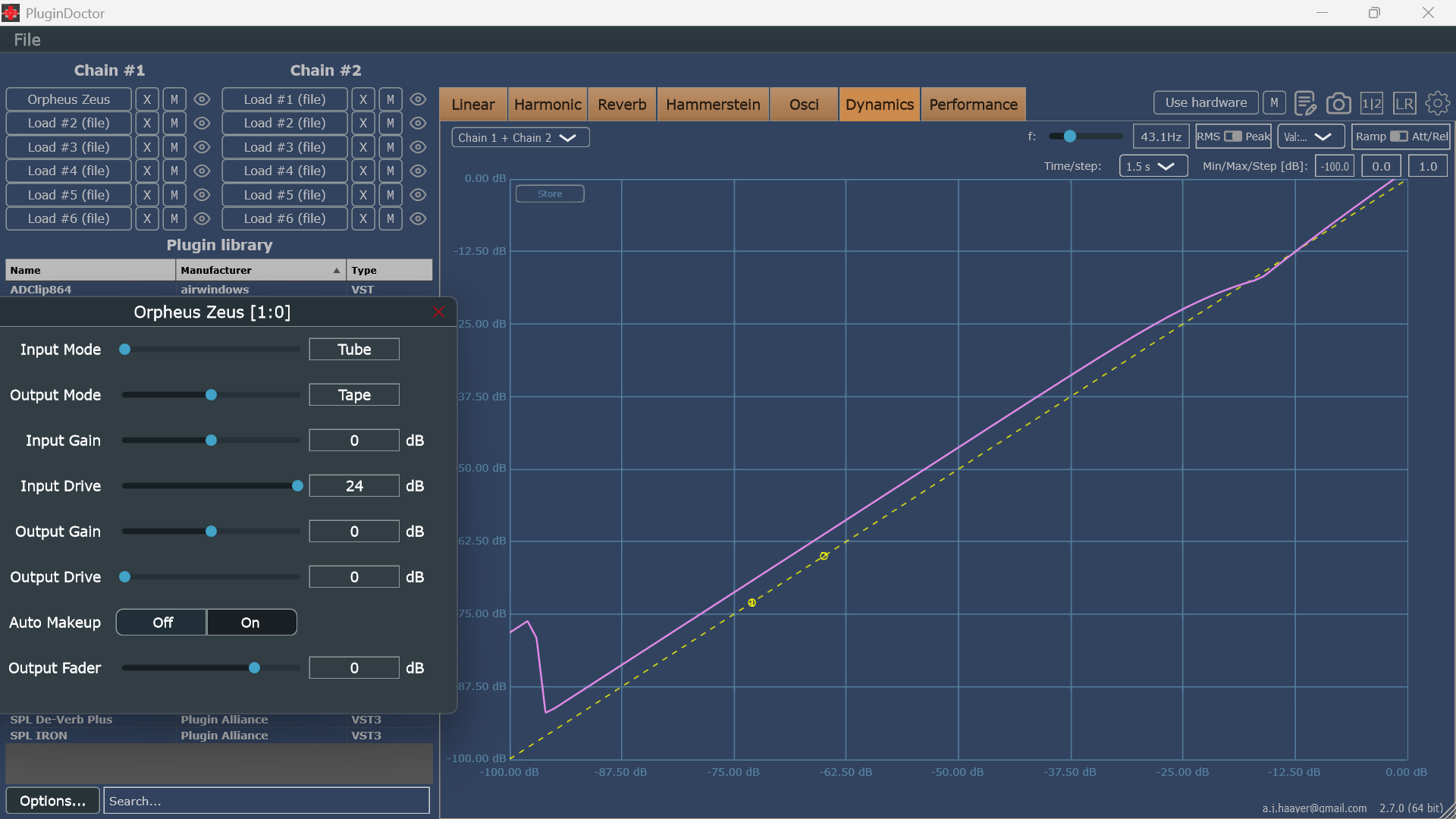
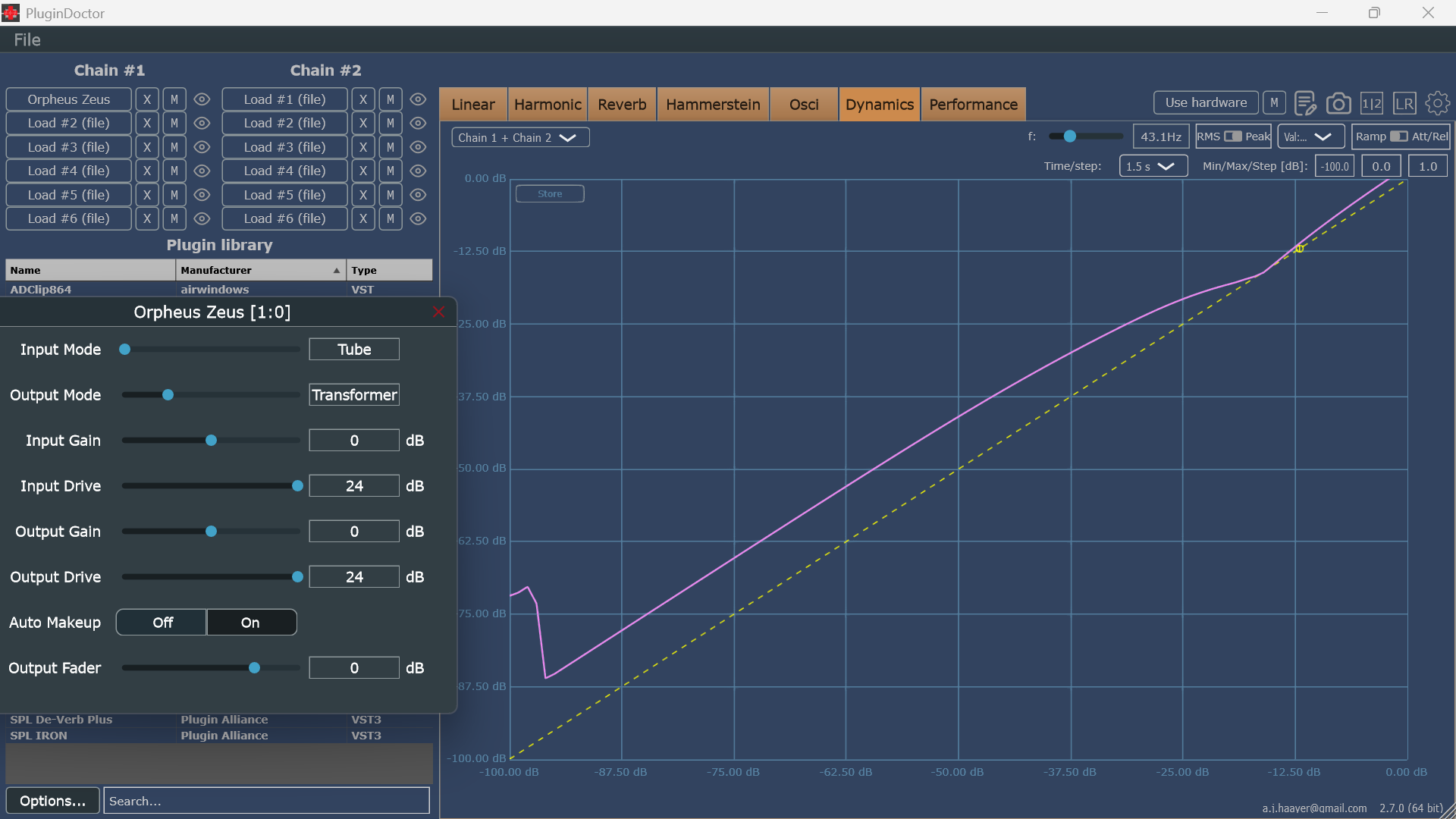
Orpheus Zeus models discrete physical circuit behaviors rather than static polynomial waveshaping. Designed with internal anti-aliasing math, it delivers musical analog color and compression knees with zero Nyquist alias foldback, even when pushed past +24 dB of input drive.
Generates a musical cascade of even and odd harmonic overtones with a smooth, forgiving knee. Thickens vocals and midrange textures while preserving transient dynamics and breath.
Simulates magnetic tape saturation and soft-clipping dynamics. Naturally rounds off brittle high frequencies and creates cohesion across dense mix elements without dulling top-end detail.
Models low-frequency inductive iron core saturation with dominant odd-order harmonics. Anti-aliasing math ensures that harmonics decaying above 20 kHz do not reflect back as inharmonic foldback grit.
- Transfer Math
- Rational Padé approximations replacing heavy transcendental math calls for zero-latency, cache-coherent sample processing
- 610 Load Anchor
- Circuit and load resistance values derived directly from the physical 610 schematic to anchor the transfer curves
- Non-Tube Modes
- Identical physical resistance values drive the math across Transformer, Tape, Hard Clip, and Soft Clip modes so they respond like real circuit loading rather than arbitrary digital soft clipping
- Independent Stages
- Discrete input and output topology selectors with separate drive and trim stages to allow flexible stage pairing
- Separation of Concerns
- Dedicated saturation engine decoupled from filtering stages so harmonic drive is handled cleanly on its own
Here at Orpheo, we believe in making music tools for everyone. If you feel like these have brought value to your sound or saved you time in your workflow, tossing a nug or dollar into our jar helps keep development rolling and our heads a lil bit more sane!
Electrifying, With Just A Tip →Technical Specifications
Engine Details
- Engine
- Dual-circuit waveshaper with Padé rational non-linear polynomial stages
- Topologies
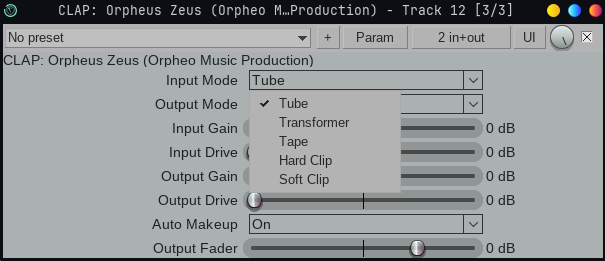
- Tube (610 load line), Transformer, Tape, Hard Clip, Soft Clip
- Latency
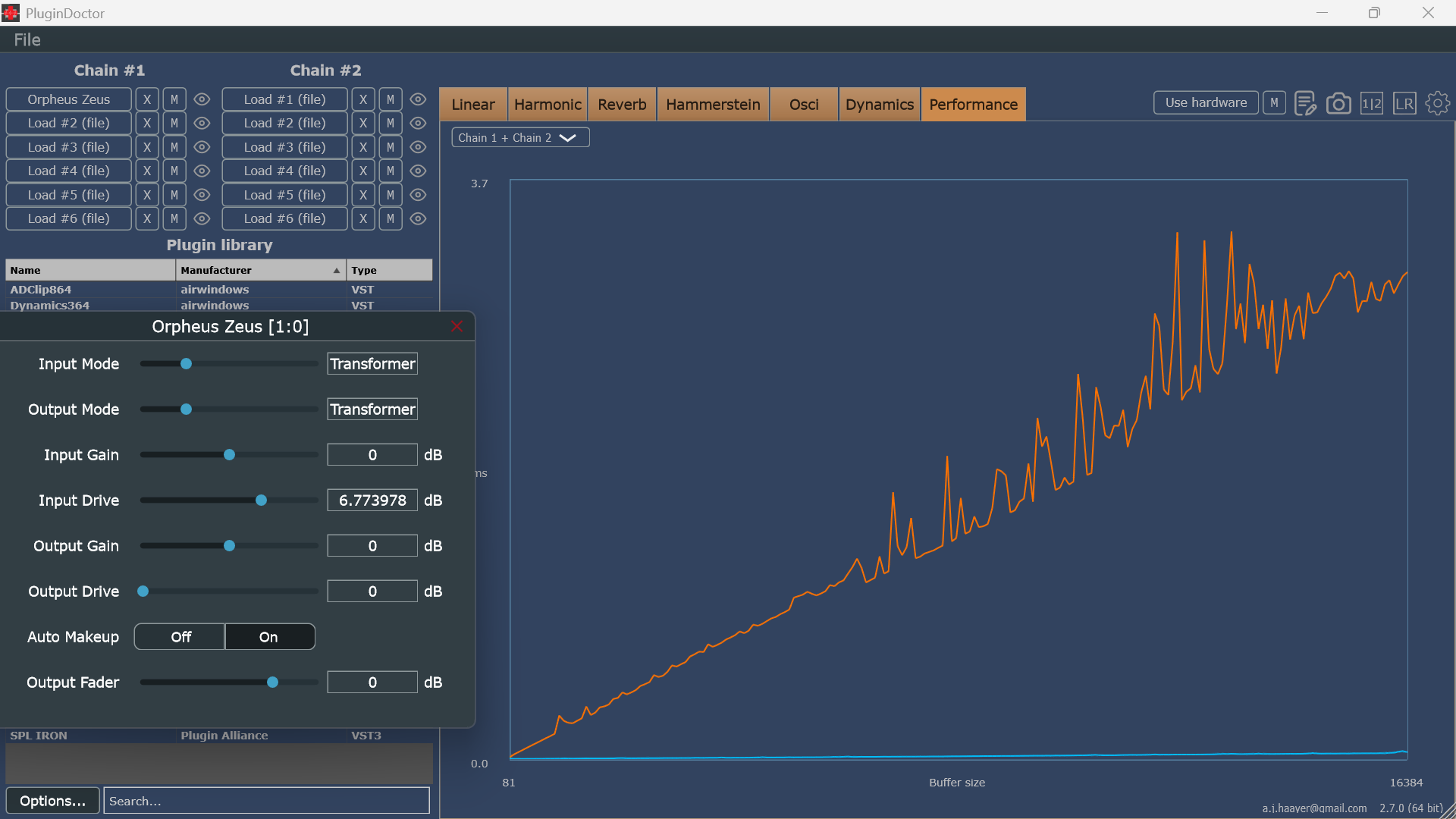
- 0 samples (Zero PDC)
- Formats
CLAPandVST3native (Linux, Windows, macOS)- UI Framework
- 100% GUI-less with native DAW parameter rendering for maximum host responsiveness
- License
- Mozilla Public License 2.0 (MPL-2.0)
macOS Gatekeeper Notice
Binaries are unsigned. Load the plugin once in your DAW, navigate to System Settings > Privacy & Security, and click Open Anyway
Alternatively, open the Terminal app and strip the quarantine flag manually:
xattr -dr com.apple.quarantine ~/Library/Audio/Plug-Ins/CLAP/*