Orpheo Music Production
The Founders Trio
A modular, high-stability plugin suite designed for native DAW rendering. No fluff, no GUI bloat, just irrefutable DSP.
Orpheus Hermes
Dynamics Without The Annoying Plink
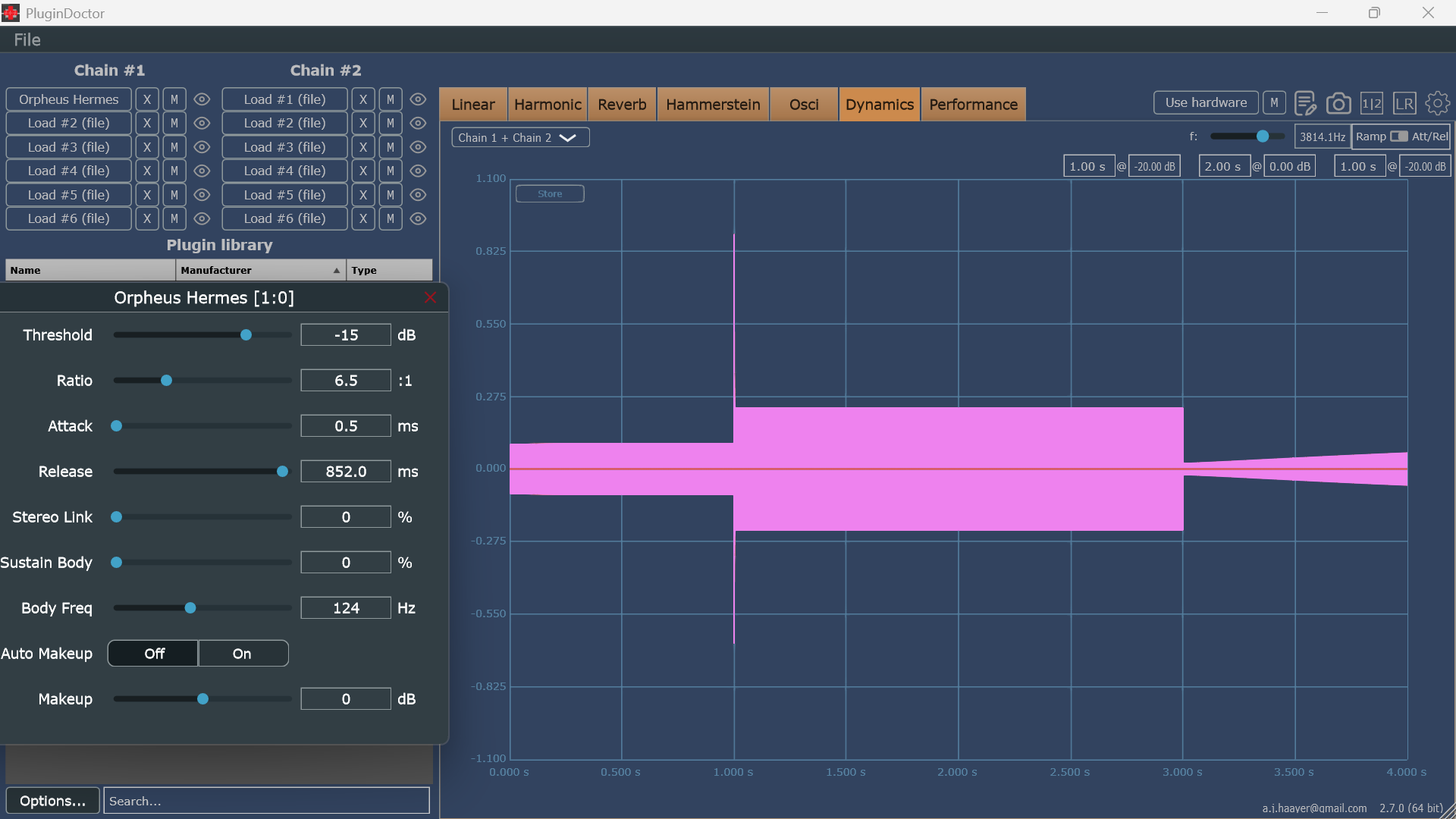
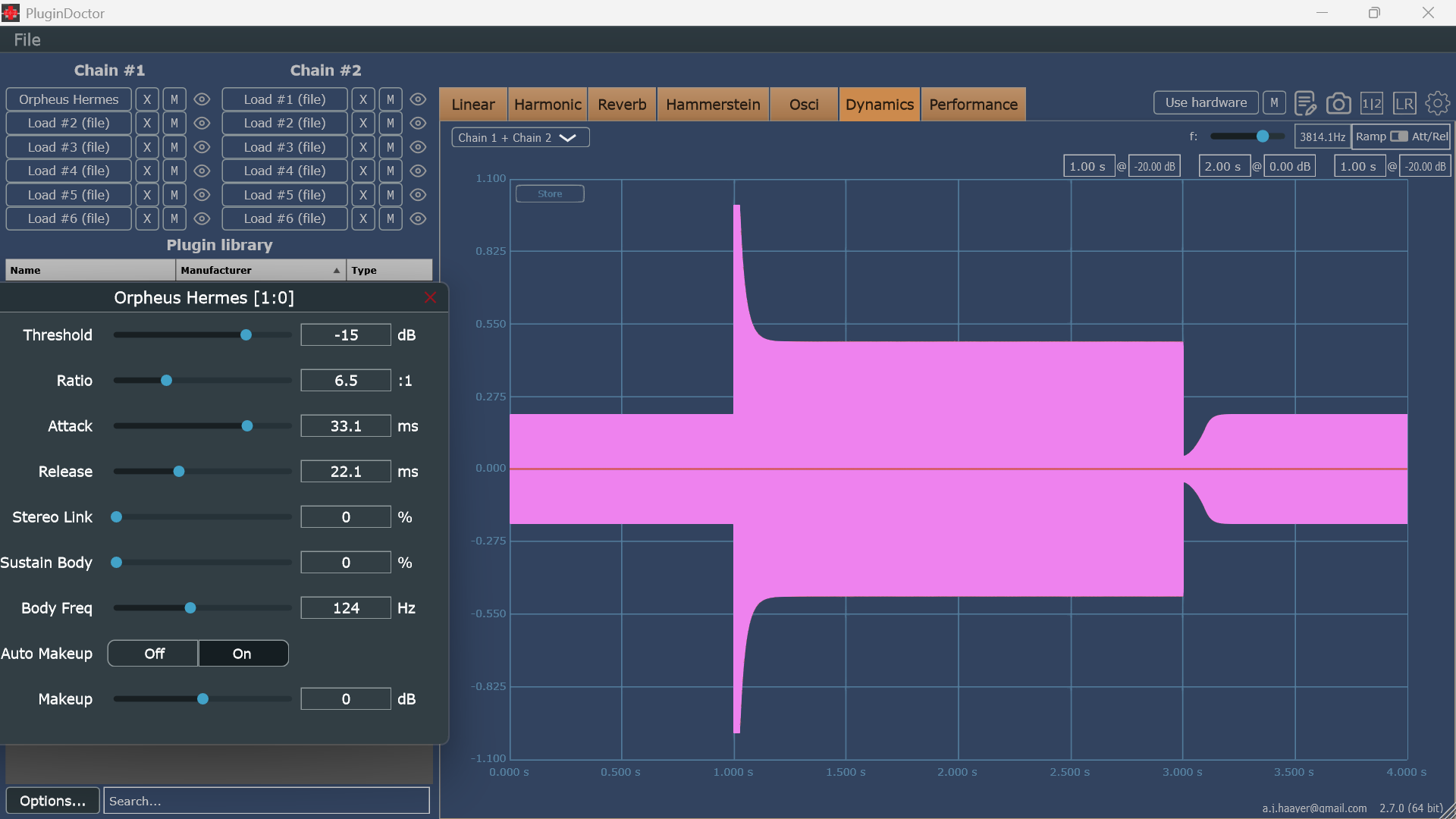
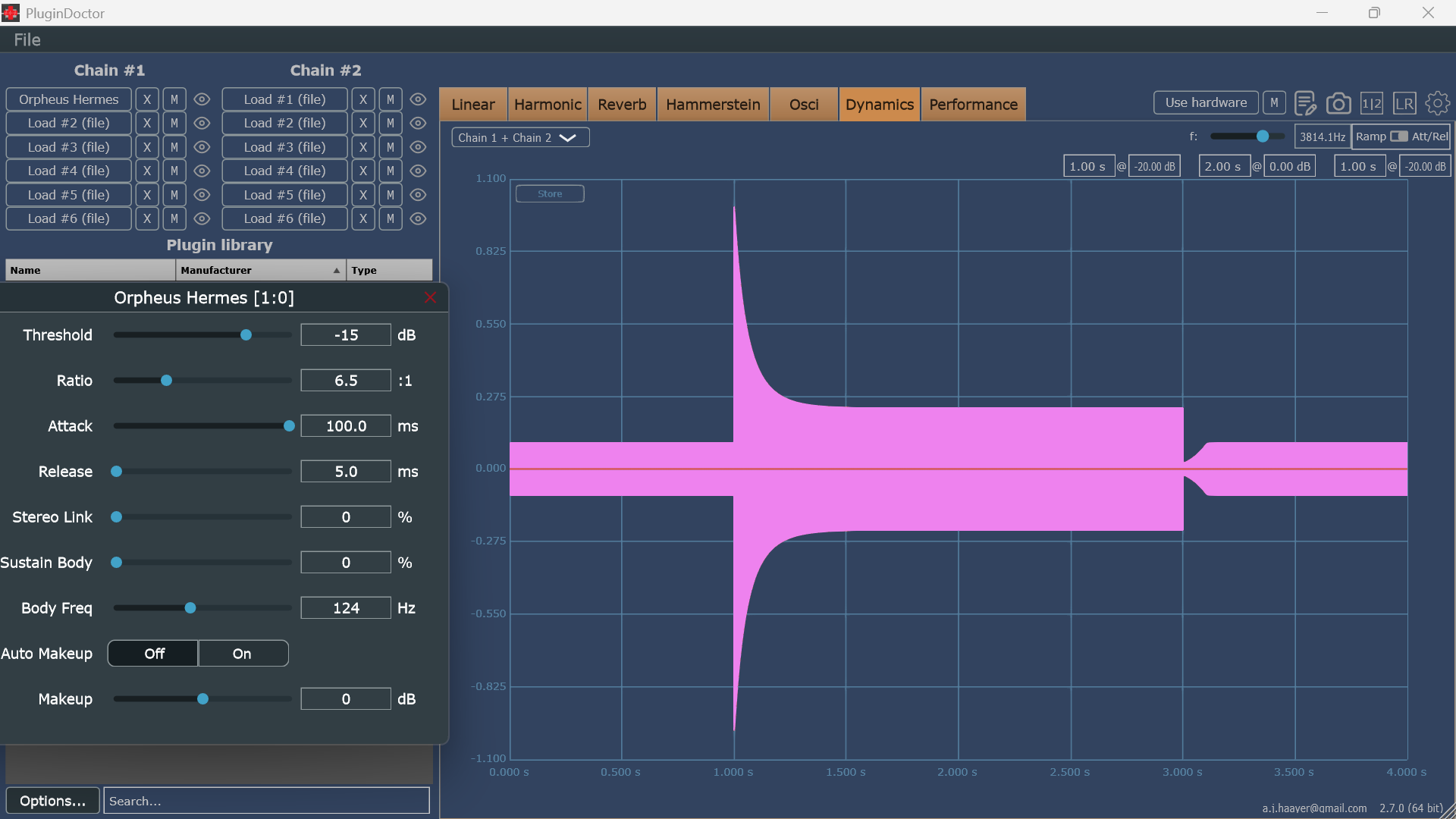
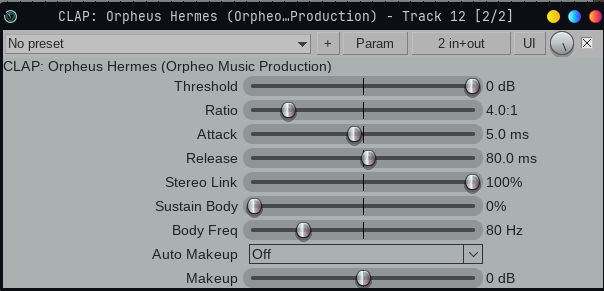
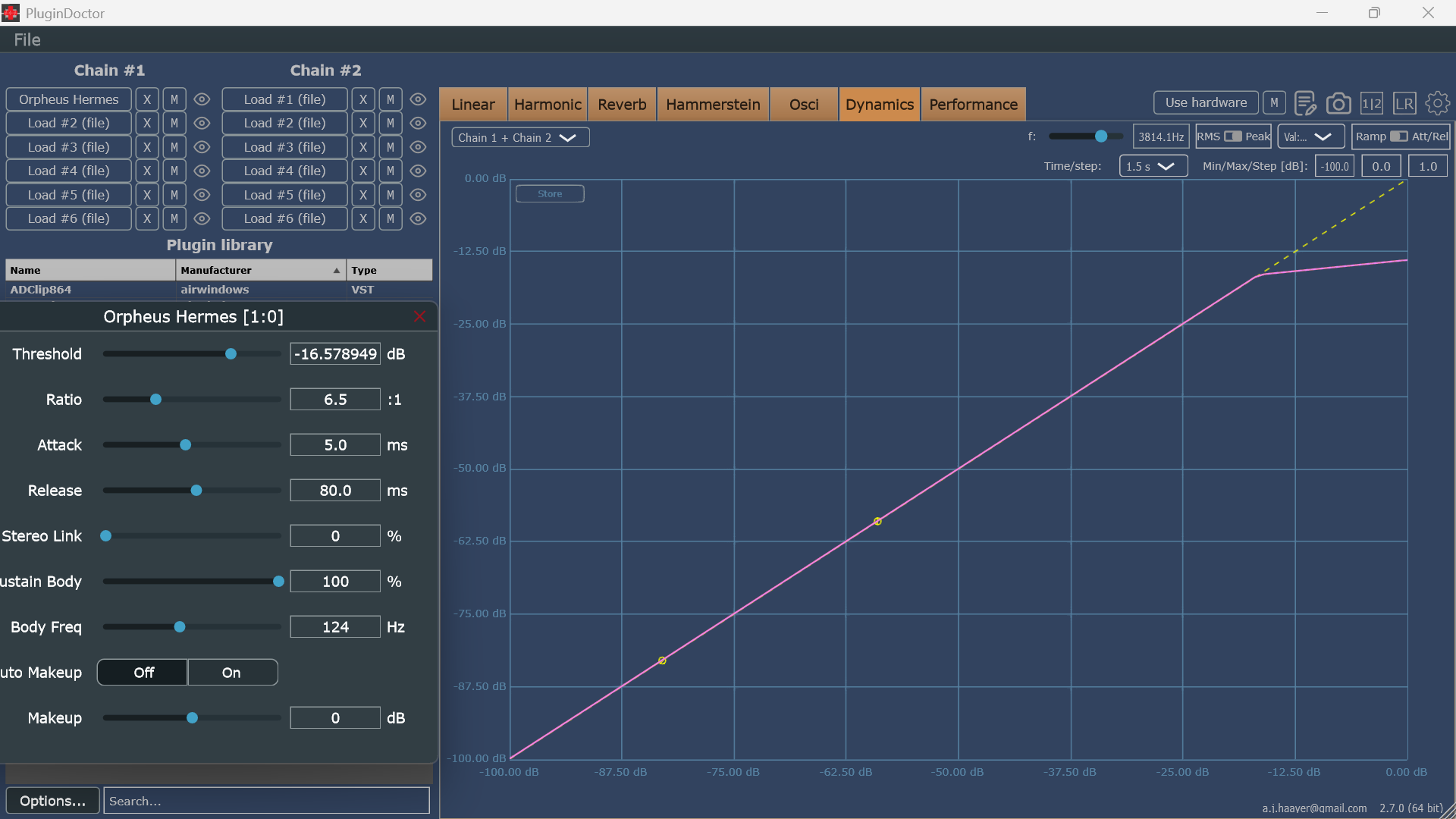
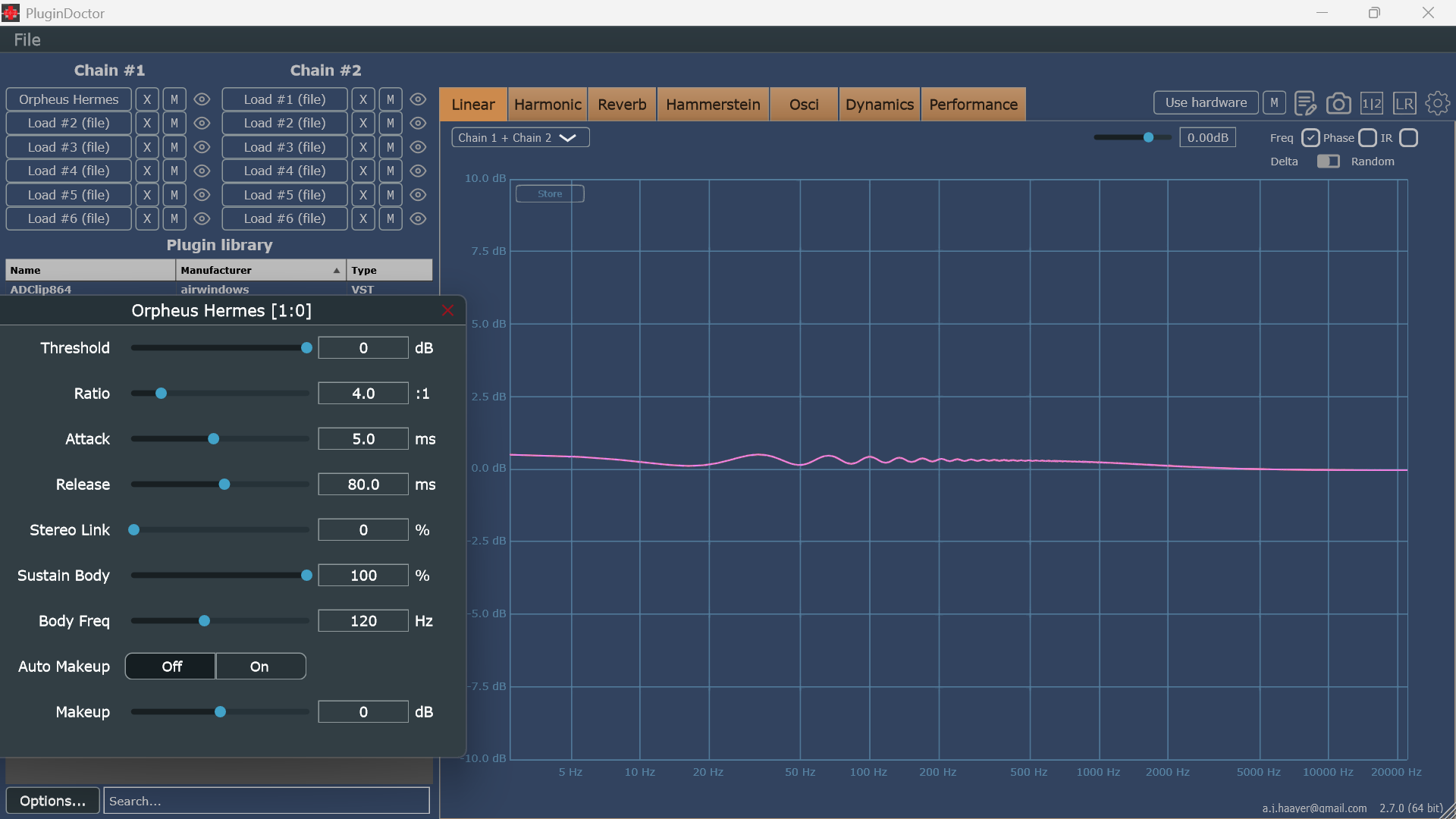
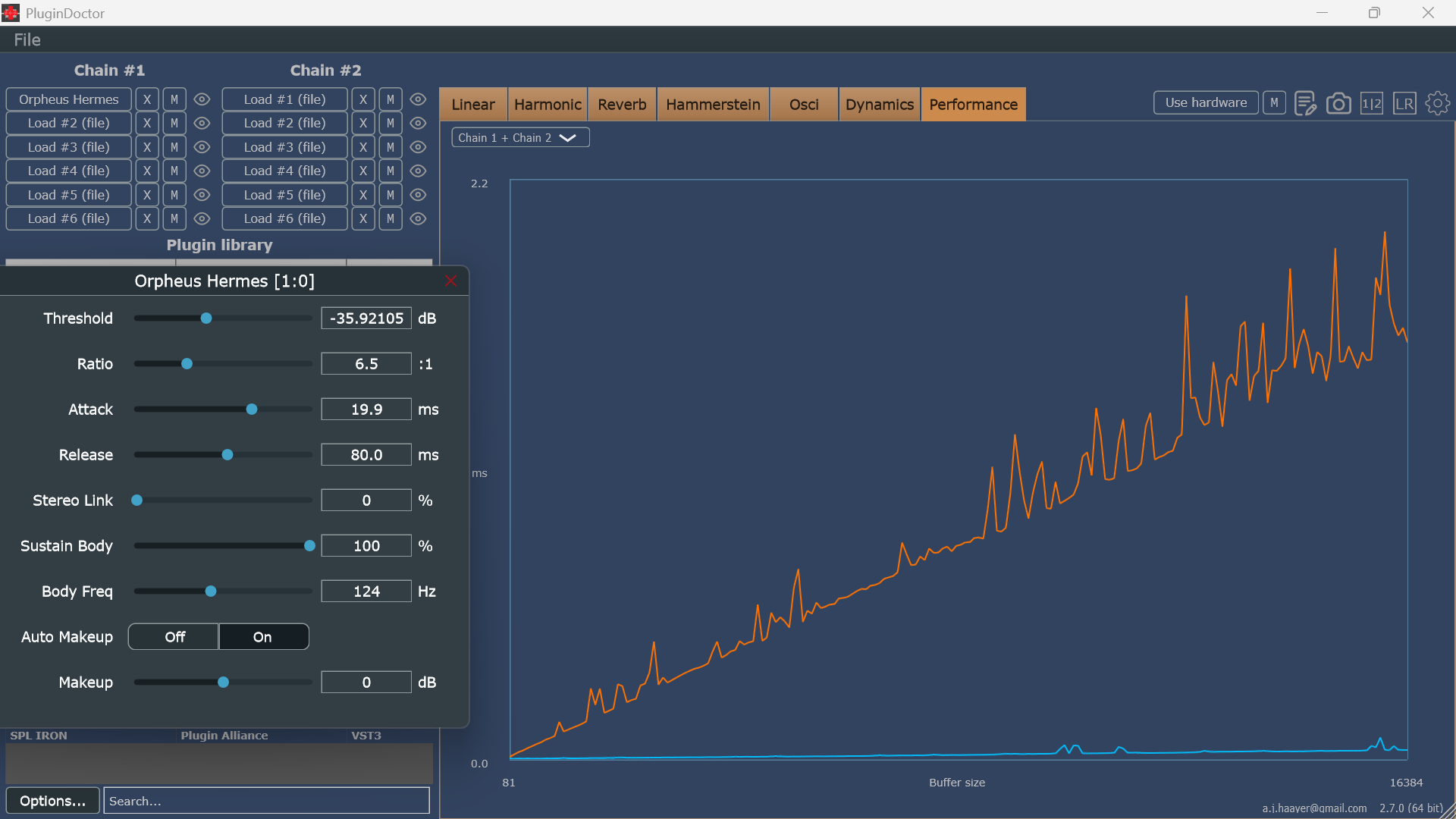
Orpheus Hermes decouples transient peak clamping from sustained low-end weight. Operating on a feed-forward detector architecture, it eliminates the brittle click distortion and squawk common to fast digital limiters while maintaining zero algorithmic latency and sample-accurate gain tracking.
Attack ballistics down to 0.5 ms clamp erratic transients instantly without waveform squashing or modulation distortion. Drum snap and pick attack stay intact while peaks are controlled transparently.
Frequency-selectable low-end reinforcement counteracts the thinning that occurs during heavy gain reduction. Anchors fundamental bass weight and midrange punch without smear or phase issues.
Functions as an uncolored feed-forward digital utility compressor by default. Selectable tube drive layers in warm analog weight post-compression, completely decoupled from detector ballistics.
- Detector Type
- Internal dynamic detection prevents transient distortion common in legacy sub-bass enhancers, removing the need for pre-clippers and gates
- Zero-Process Utility
- Deterministic digital feed-forward compressor circuit designed for fast level staging, ducking, and punch reinforcement
- Tube Saturation
- Selectable tube drive circuit decoupled from detector ballistics for musical saturation without compression squawk
- Sub Harmonics
- Generates targeted upper harmonics from fundamentals to make low-end translate clearly on small monitors without sacrificing headroom
Orpheus Zeus
Physical Circuit Loading Across Discrete Topologies
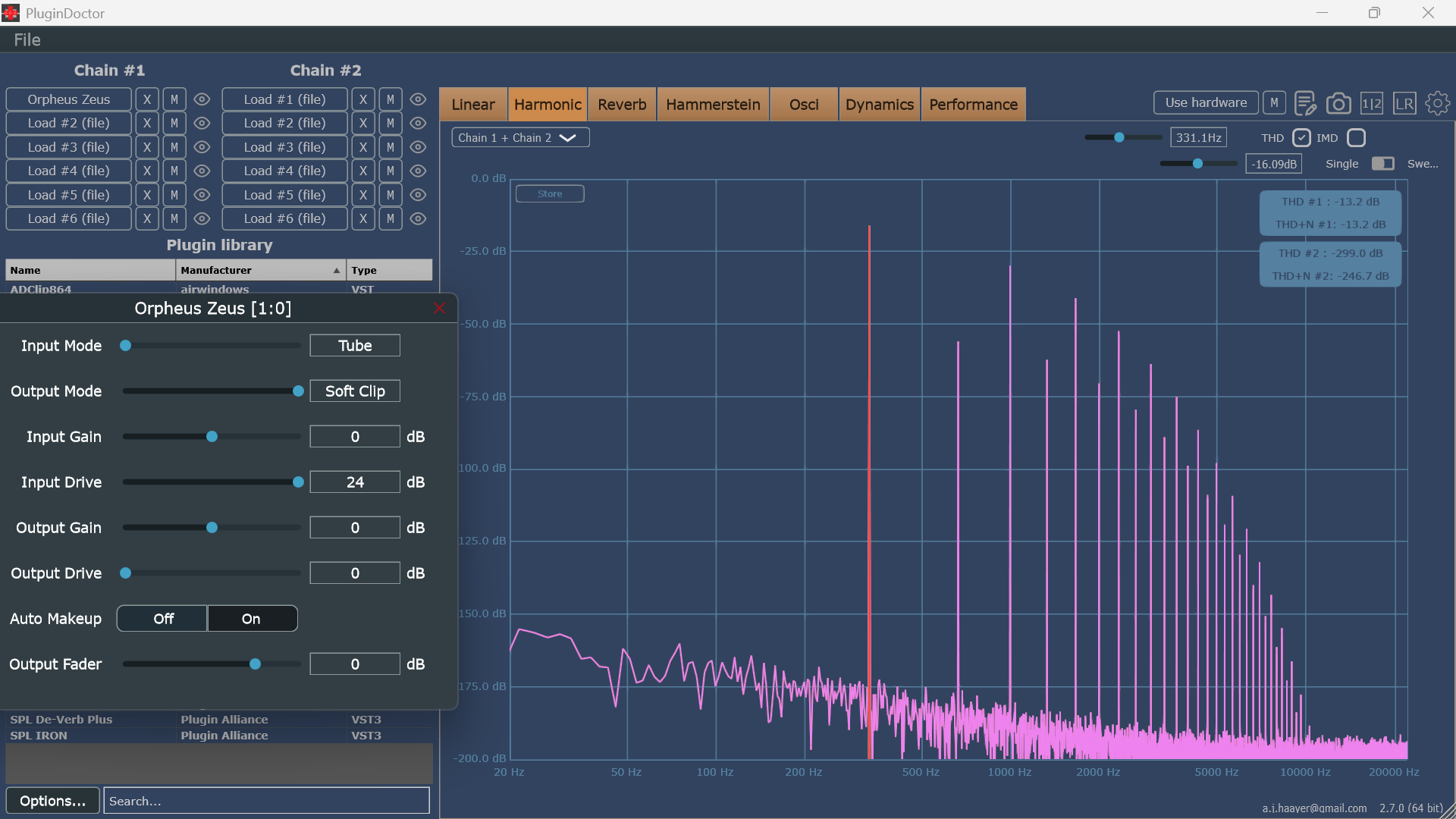
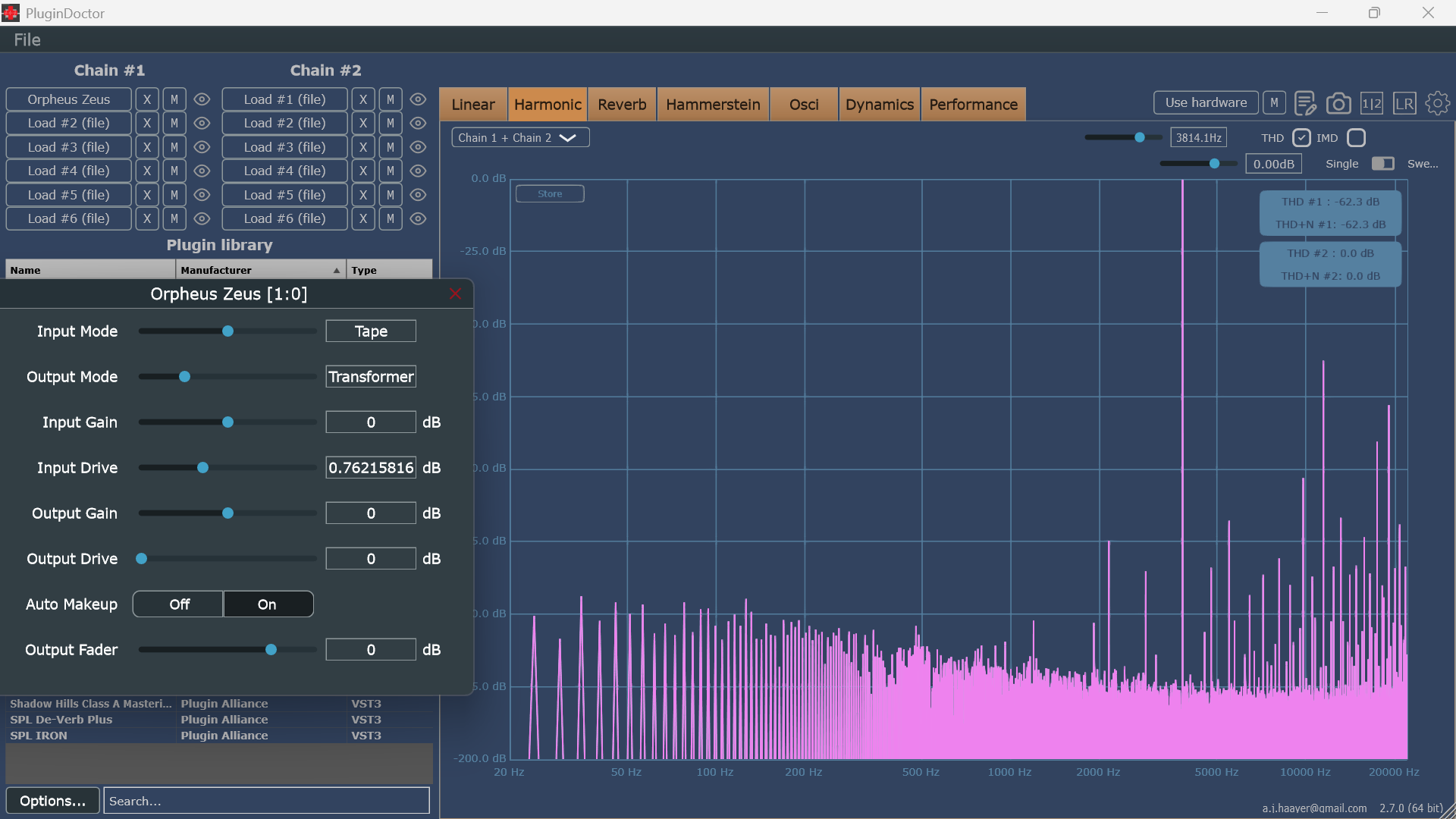
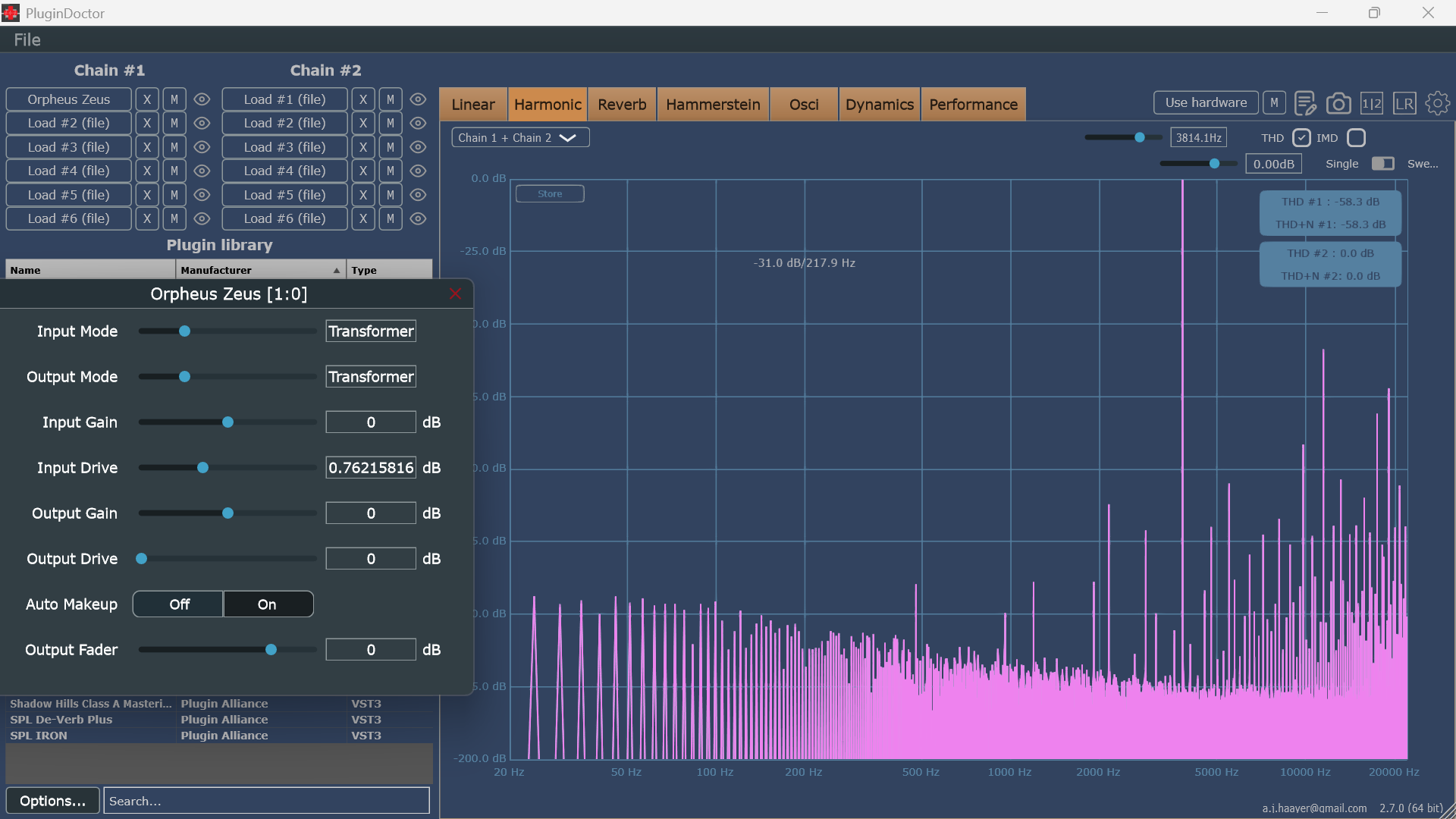
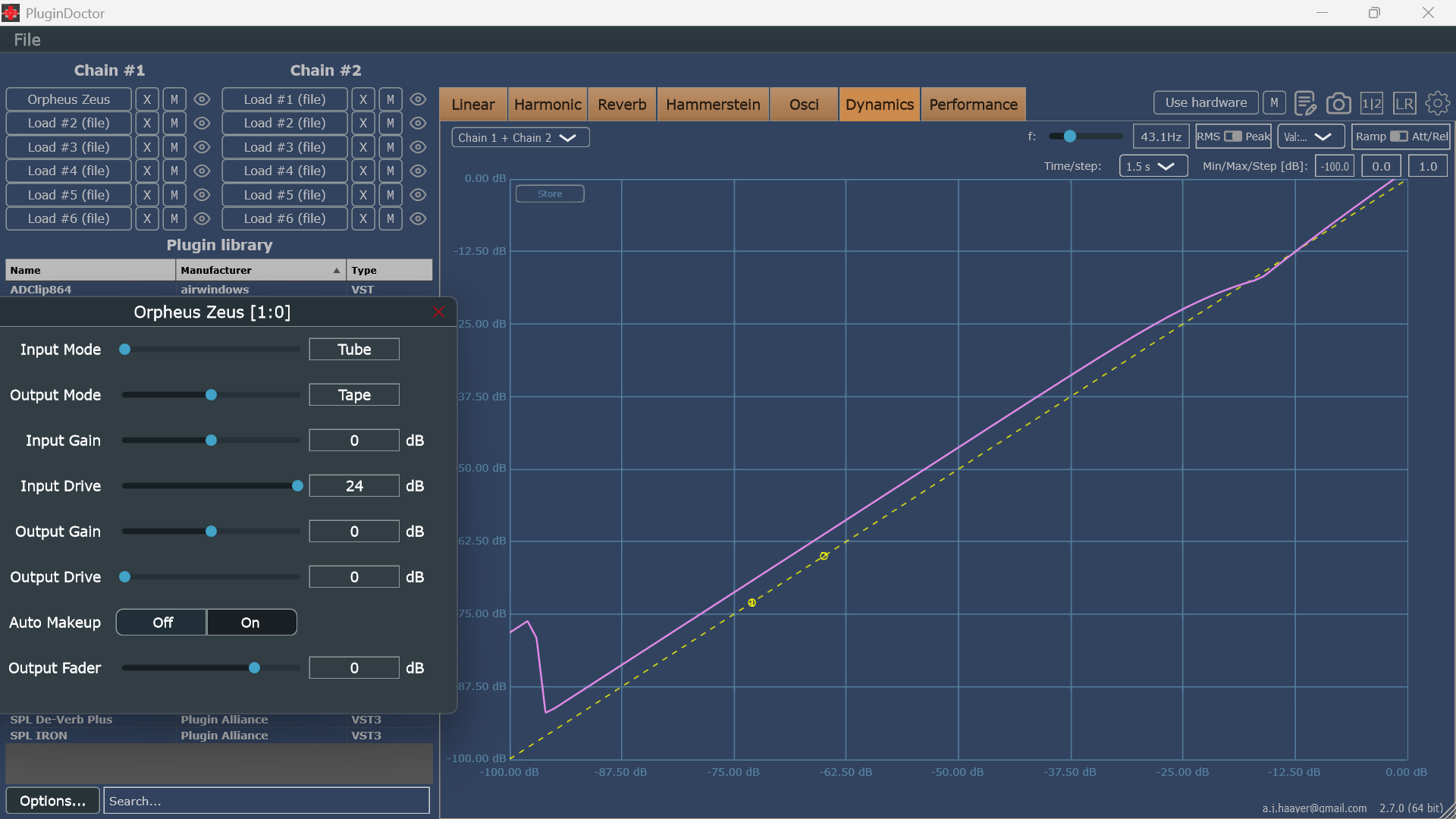
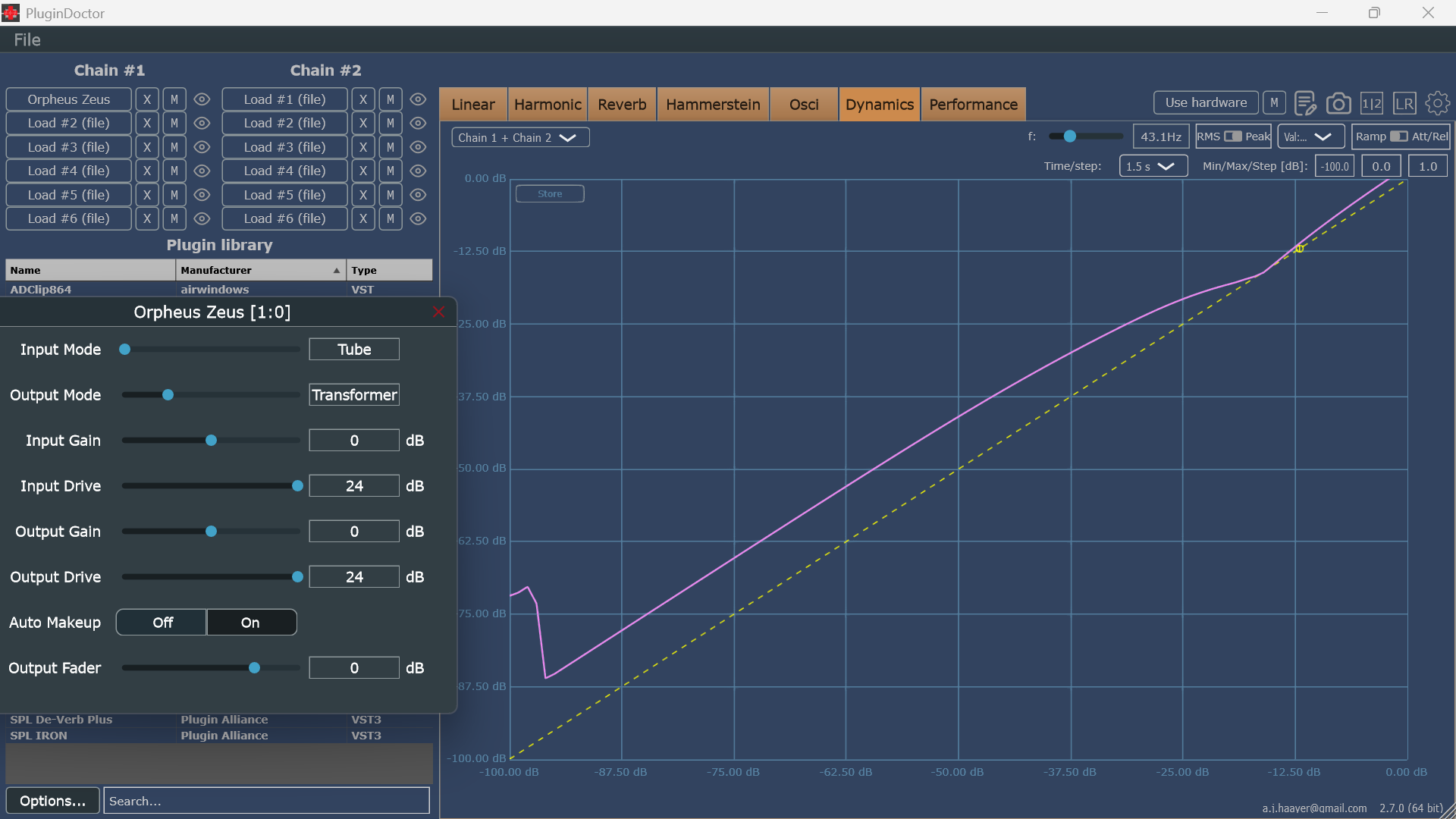
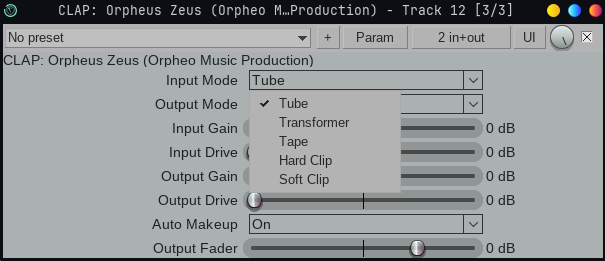
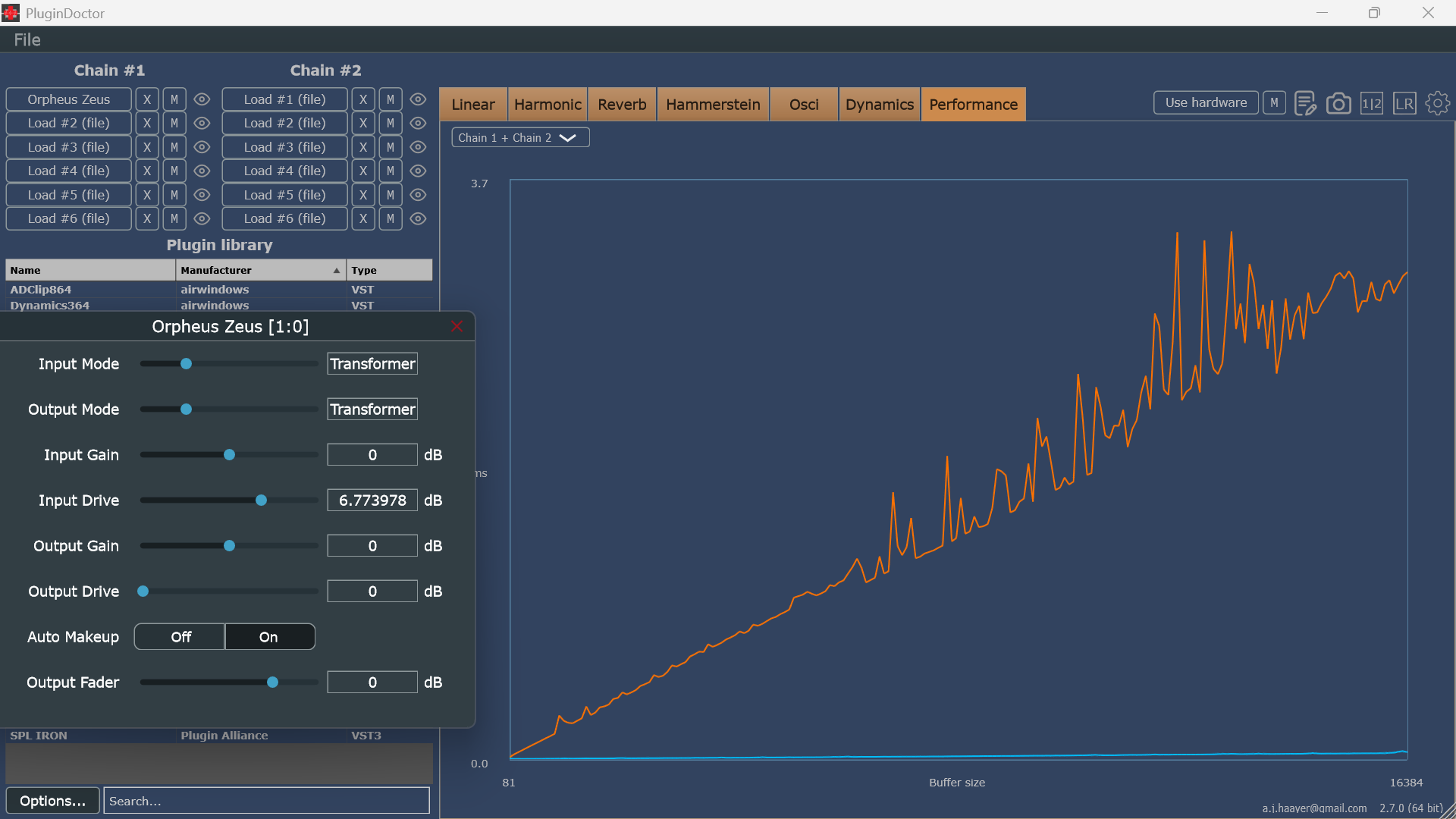
Orpheus Zeus models discrete physical circuit behaviors rather than static polynomial waveshaping. Designed with internal anti-aliasing math, it delivers musical analog color and compression knees with zero Nyquist alias foldback, even when pushed past +24 dB of input drive.
Generates a musical cascade of even and odd harmonic overtones with a smooth, forgiving knee. Thickens vocals and midrange textures while preserving transient dynamics and breath.
Simulates magnetic tape saturation and soft-clipping dynamics. Naturally rounds off brittle high frequencies and creates cohesion across dense mix elements without dulling top-end detail.
Models low-frequency inductive iron core saturation with dominant odd-order harmonics. Anti-aliasing math ensures that harmonics decaying above 20 kHz do not reflect back as inharmonic foldback grit.
- Architecture
- Dual-stage saturation modeling independent input and output non-linearities
- Topologies
- Selectable physical circuit models:
Tube,Tape,Transformer - Anti-Aliasing
- Internal oversampling and anti-aliasing math ensuring zero Nyquist alias foldback under high drive
- Performance
- Zero latency, sample-accurate processing with cache-coherent memory footprint
Orpheus Aphrodite
Console DNA Captured In Pure Curve Geometry
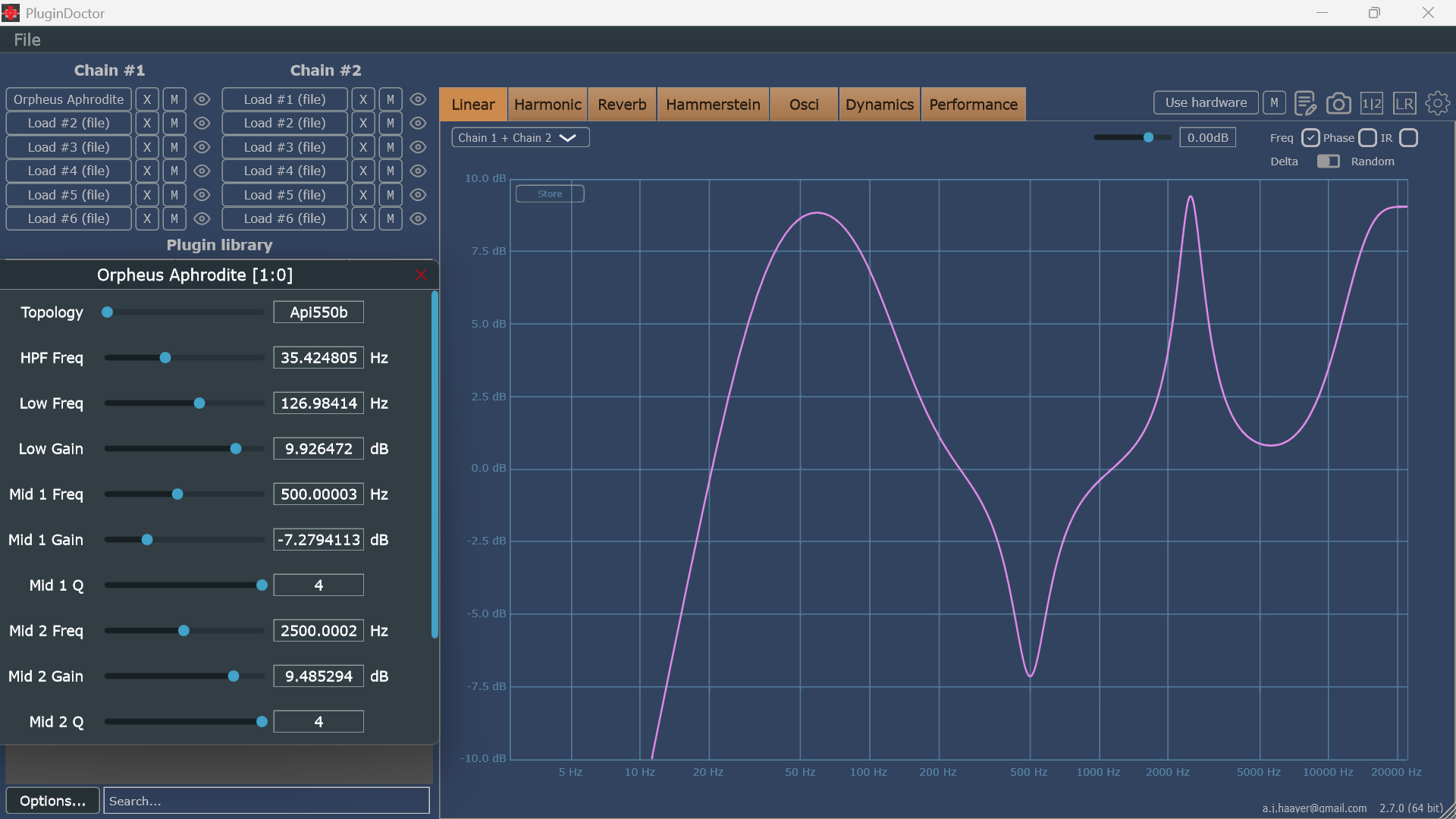
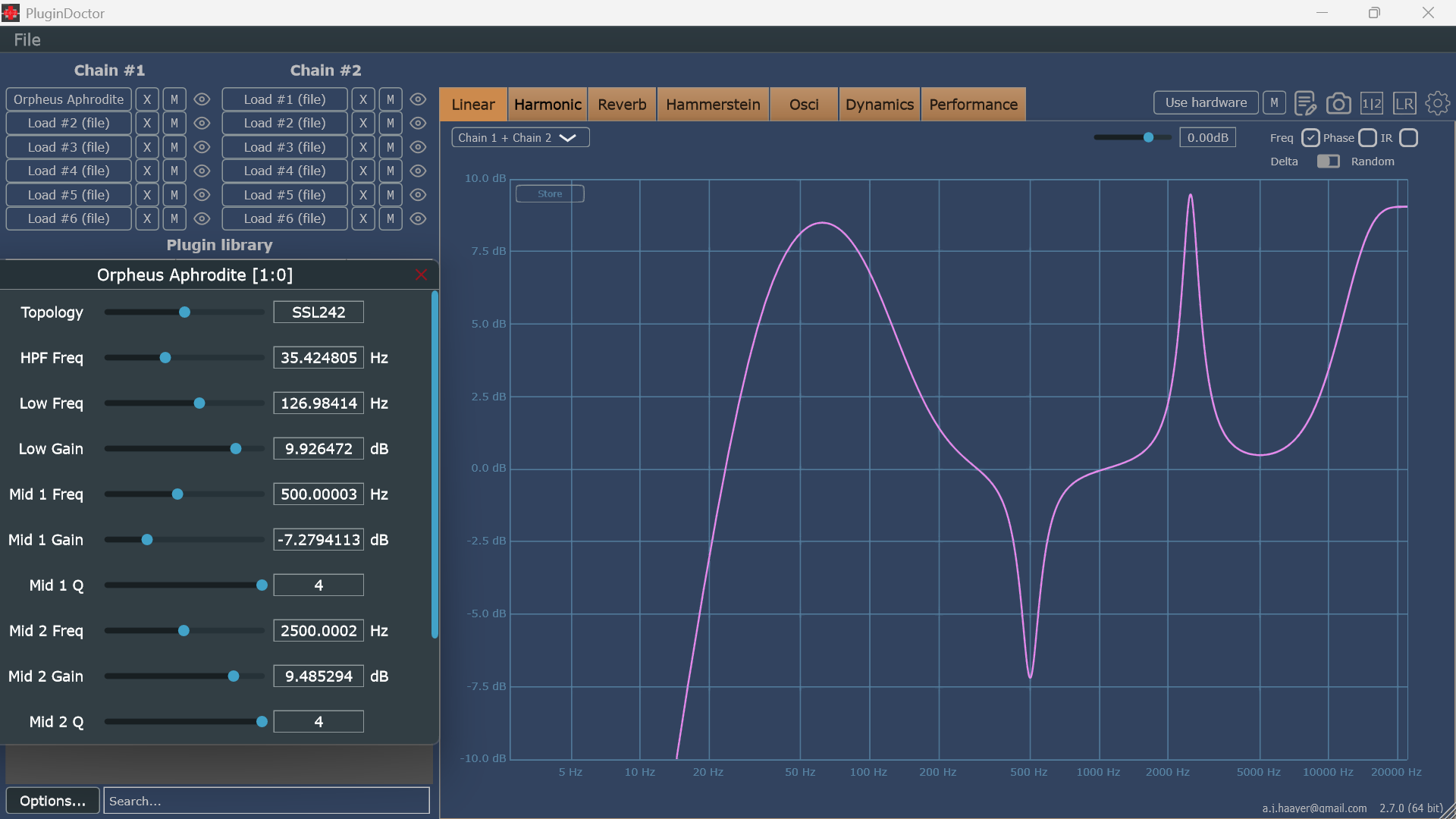
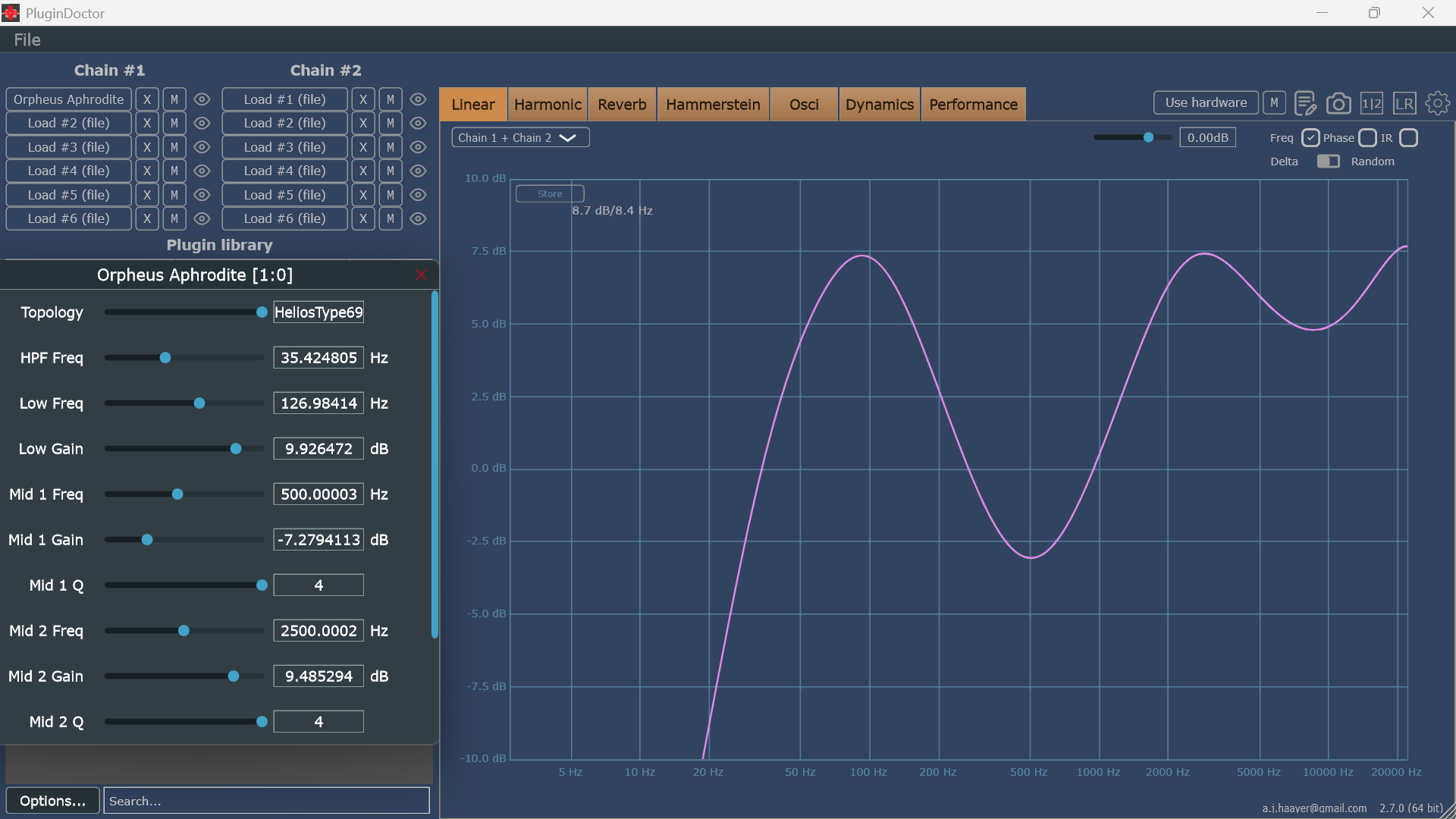
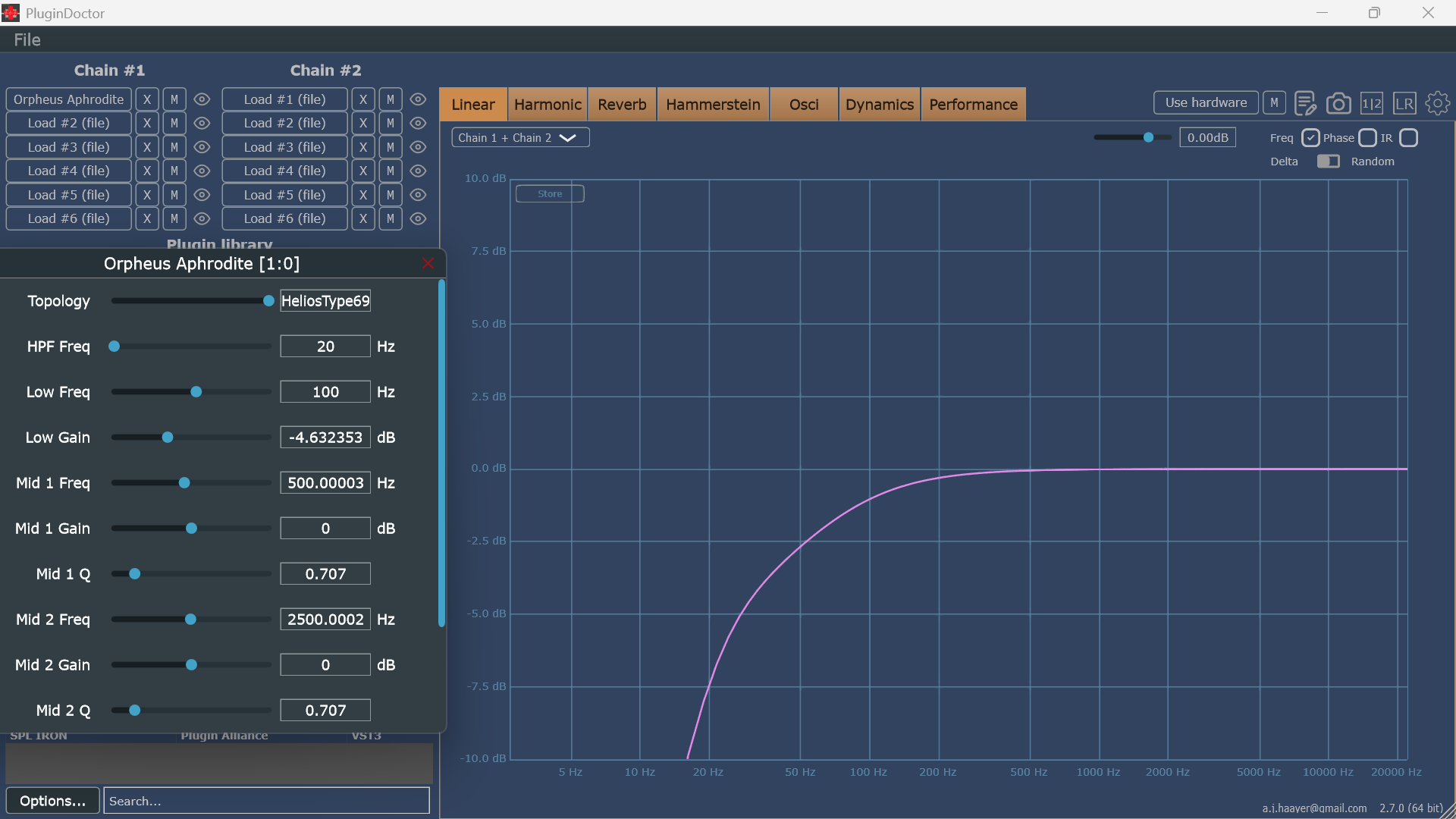
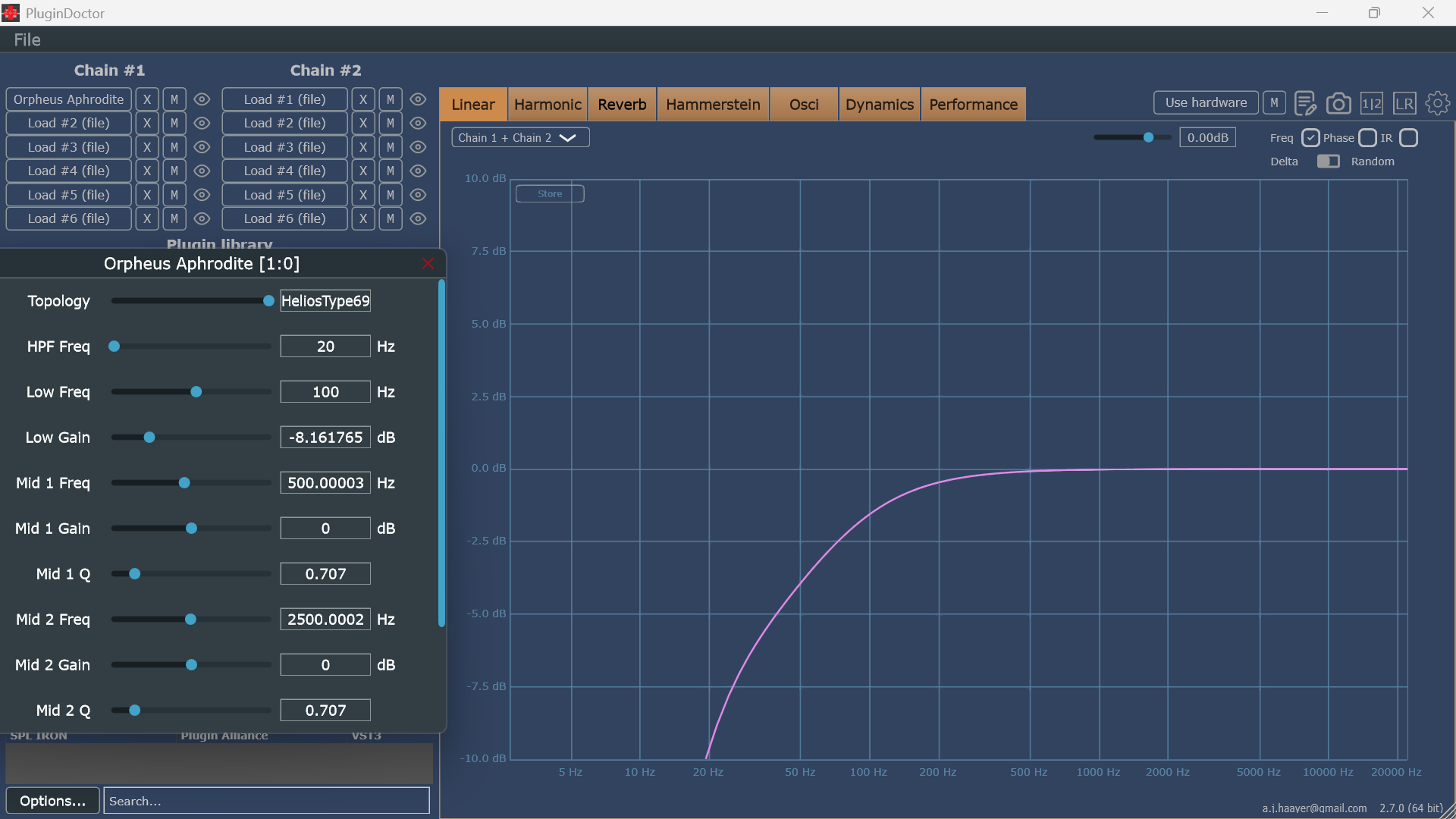
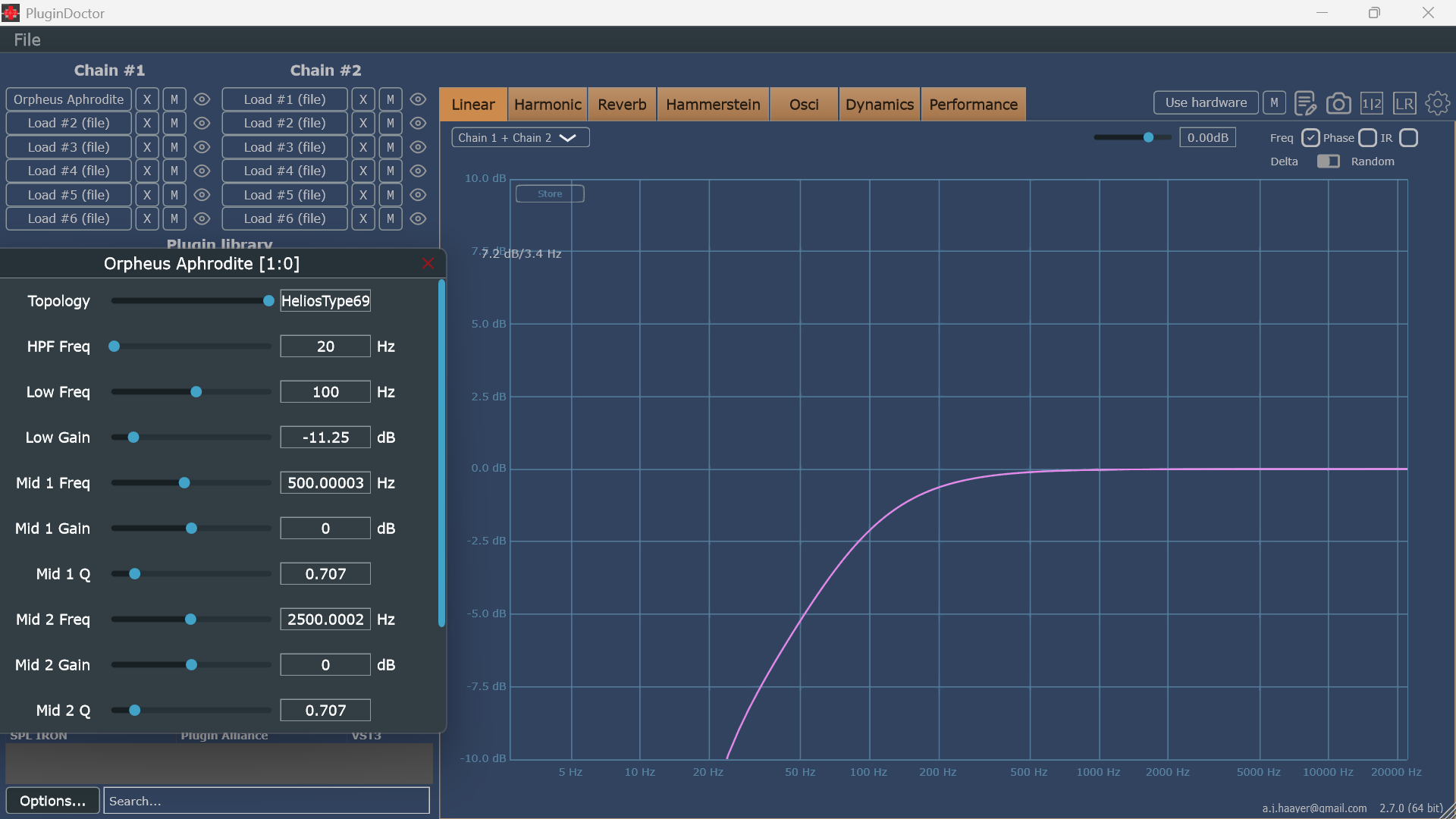
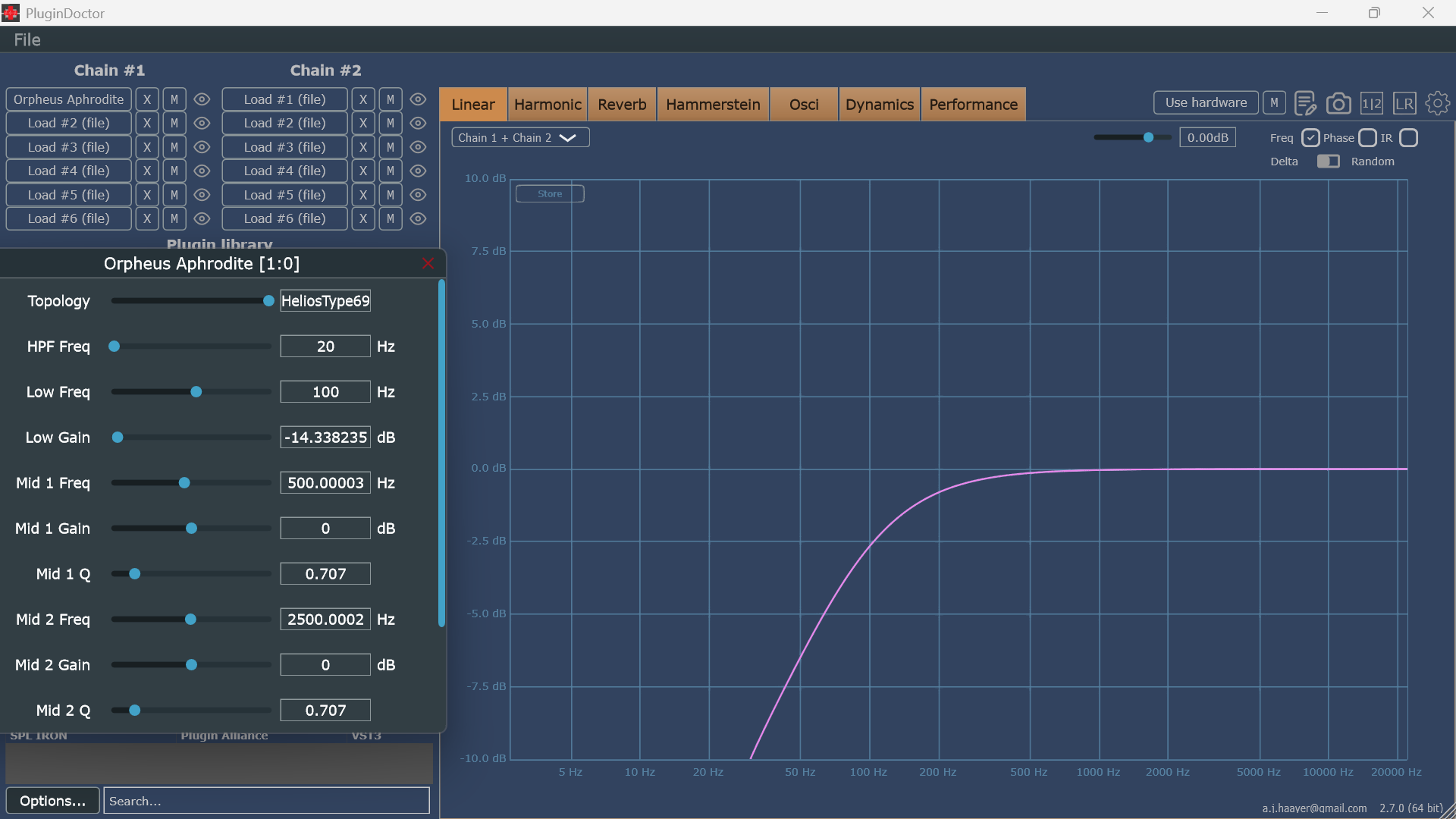
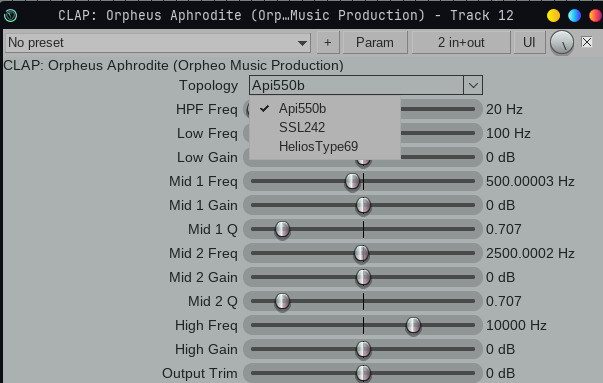
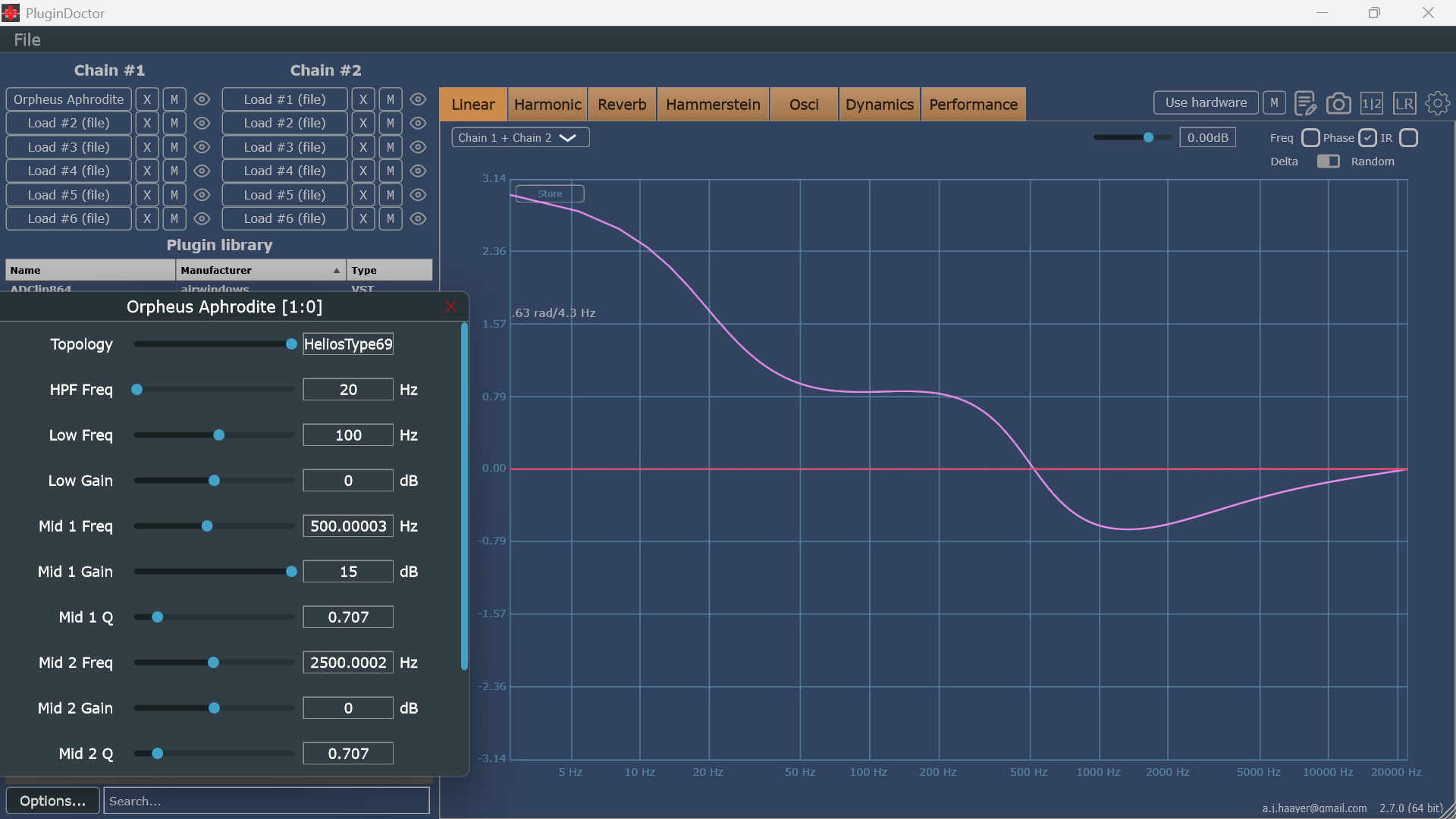
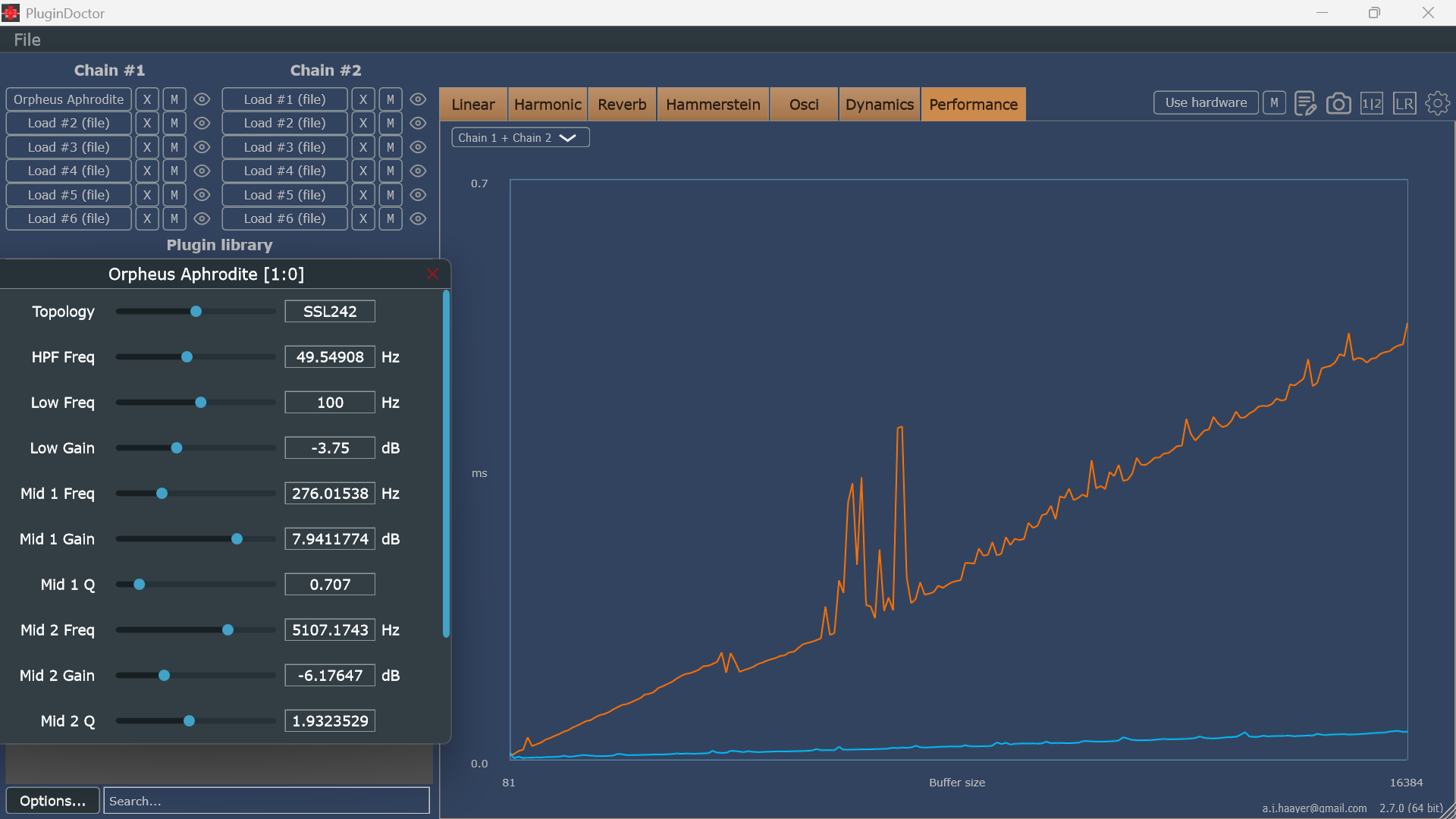
Orpheus Aphrodite executes dynamic filter coefficient recalculation per sample block. Switching console topologies via the host parameter does not load pre-rendered impulse responses or static convolution kernels. It alters the active coefficient mathematics directly, preserving pure minimum-phase tracking, zero algorithmic latency, and absolute numeric precision.
Bandwidth responds dynamically to gain depth. Gentle 2 dB adjustments maintain broad, transparent curves for tonal shaping. Pushing into aggressive ±12 dB territory narrows the filter skirt automatically into focused corrective shapes without requiring a secondary Q control.
Filter bandwidth remains locked and symmetrical across all boost and cut depths. This delivers surgical isolation and constant band separation, preserving adjacent frequency relationships regardless of how heavily a band is driven.
Models passive R/C/L inductor curve interactions. Mid bands exhibit authentic musical resonance, while the low-cut circuit accurately models the physical console's stepped inductor taps at -3 dB, -6 dB, -9 dB, and -12 dB instead of a generic continuous slope.
- Architecture
- 100% GUI-less parametric EQ utilizing native CLAP/DAW parameters
- Topology
- Dynamic drop-downs adapt slider curves directly to specific console topologies:
API 550b,SSL,Helios - Integration
- Completely decoupled from the saturation stage for purely mathematical EQ shaping
- Dynamic Filtering
- Topology-matched high-pass filtering (18 dB/octave on SSL 242, 12 dB/octave on API 550b and Helios) to clear sub-audible rumble
DAW Stress Test & System Verification
Real-World Host Load & Chain Verification
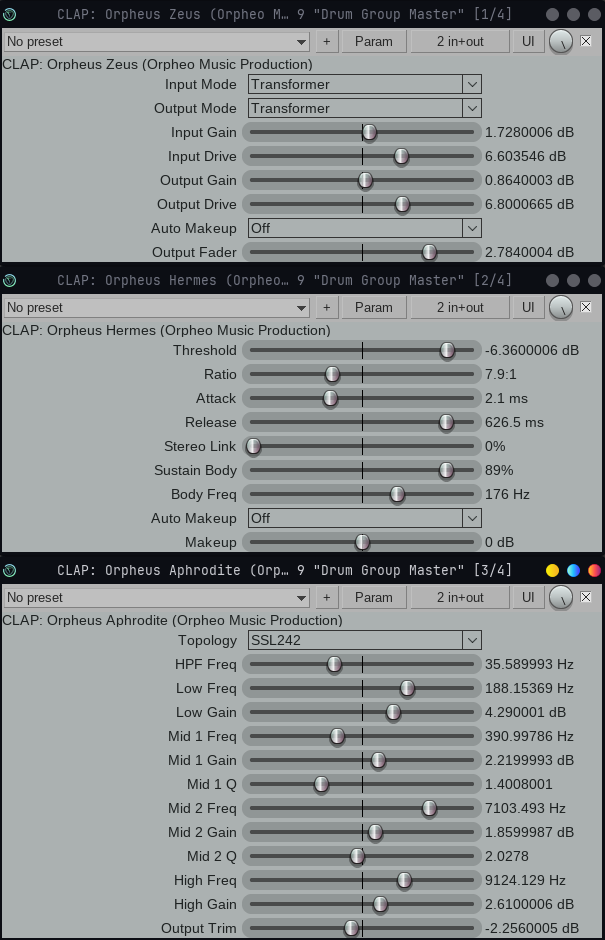
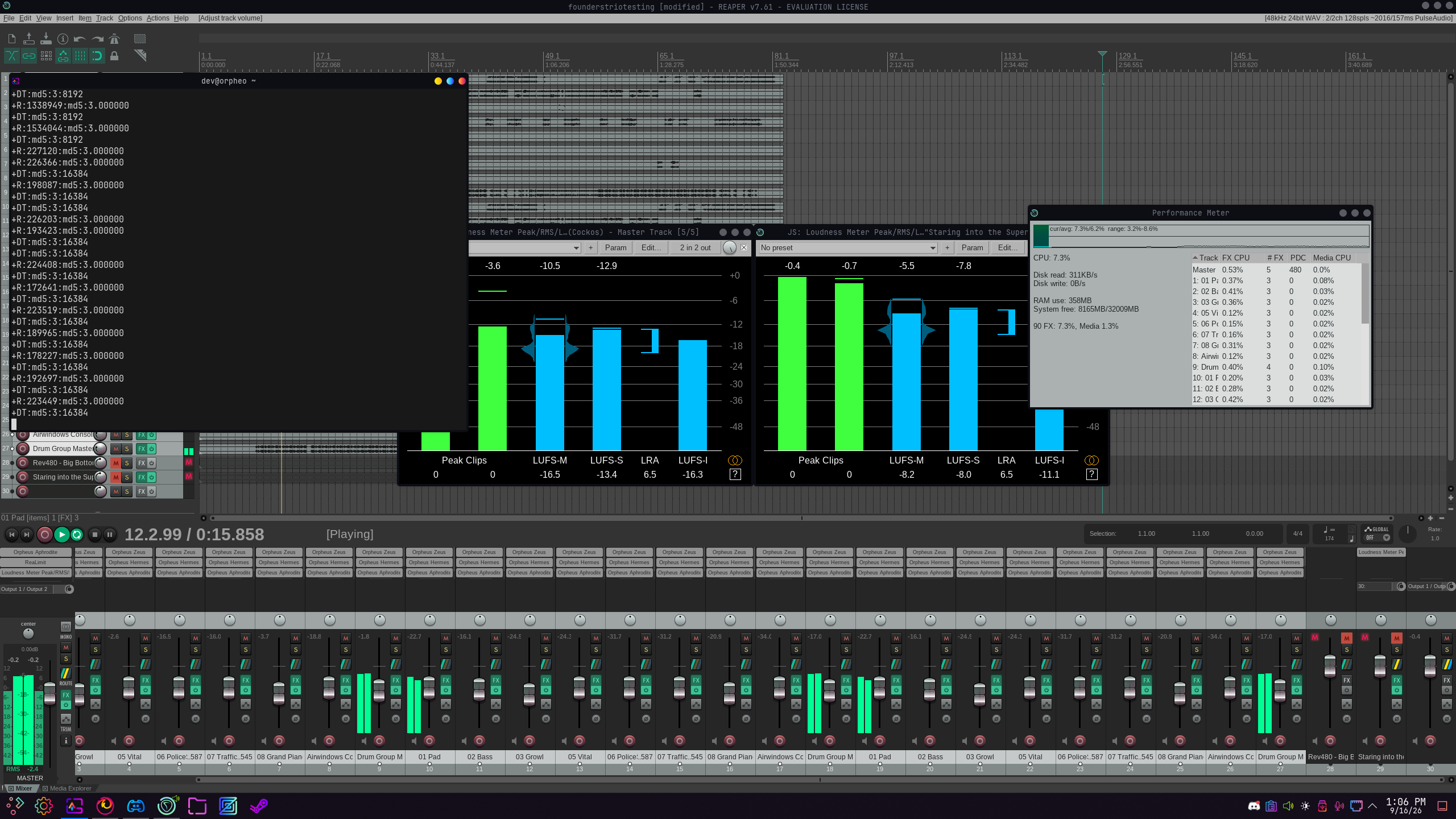
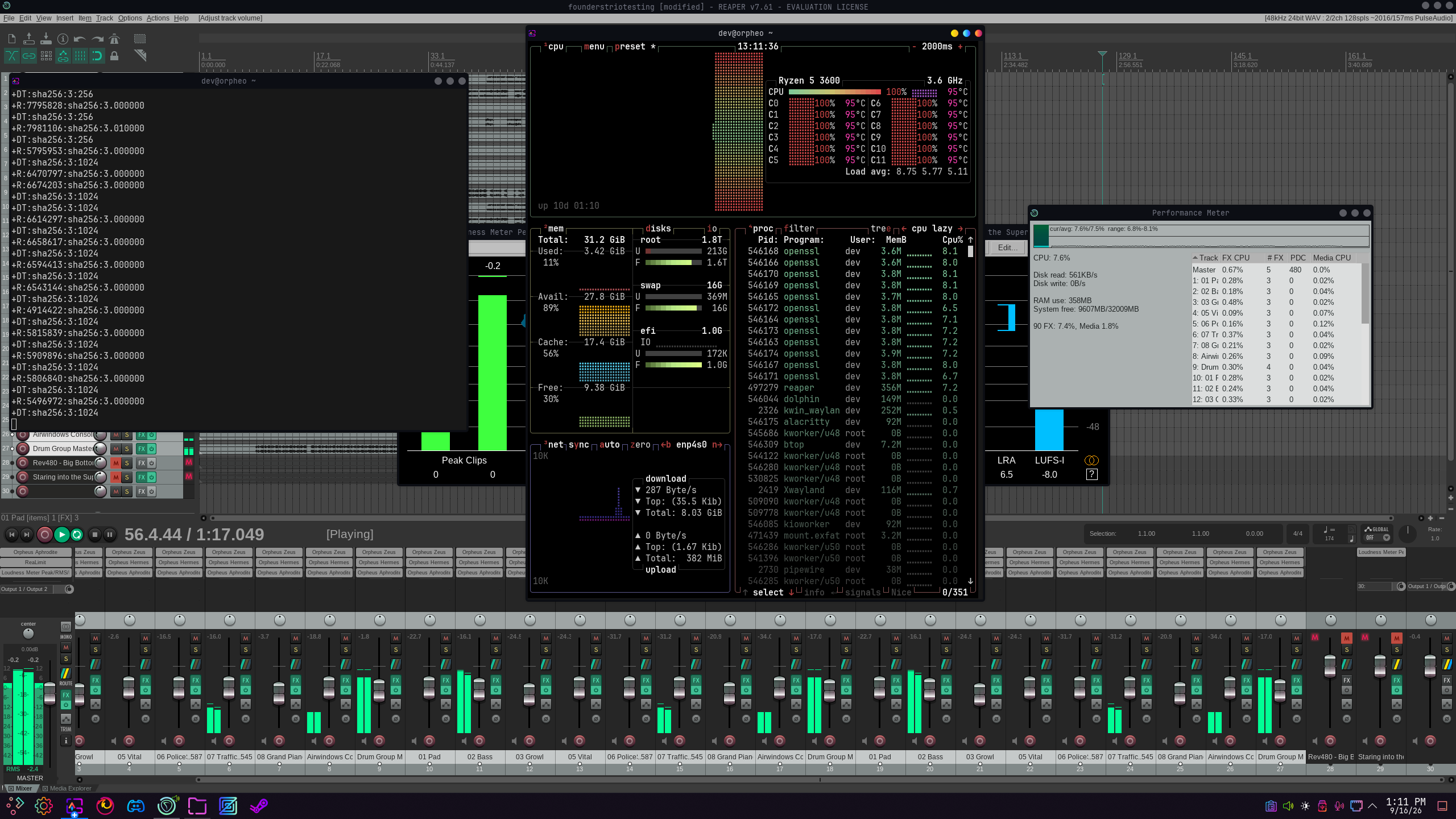
Here at Orpheo, we believe in making music tools for everyone. If you feel like these have brought value to your sound or saved you time in your workflow, tossing a nug or dollar into our jar helps keep development rolling and our heads a lil bit more sane!
Buy Us A Coffee →Under the Hood
Technical Specifications
- API
CLAPandVST3native- Platforms
- Linux, Windows, macOS
- Interface
- 100% GUI-less relying entirely on native DAW UI to guarantee zero render-blocking bloat
- Stability
- Built for broadcast-tier reliability and extreme portability
- Source
- Open-source under
MPL 2.0hosted on Codeberg
macOS Gatekeeper Notice
Binaries are unsigned. Load the plugin once in your DAW, navigate to System Settings > Privacy & Security, and click Open Anyway
Alternatively, open the Terminal app and strip the quarantine flag manually:
xattr -dr com.apple.quarantine ~/Library/Audio/Plug-Ins/CLAP/*