Console Curve Geometry
Orpheus Aphrodite
A zero-latency console EQ focused purely on curve geometry rather than CPU-heavy analog smear. Models API 550b, SSL 242, and clean Helios Type 69 filter shapes via optimized biquads.
Console DNA Captured In Pure Curve Geometry
Zero-Latency Console Biquad Architecture
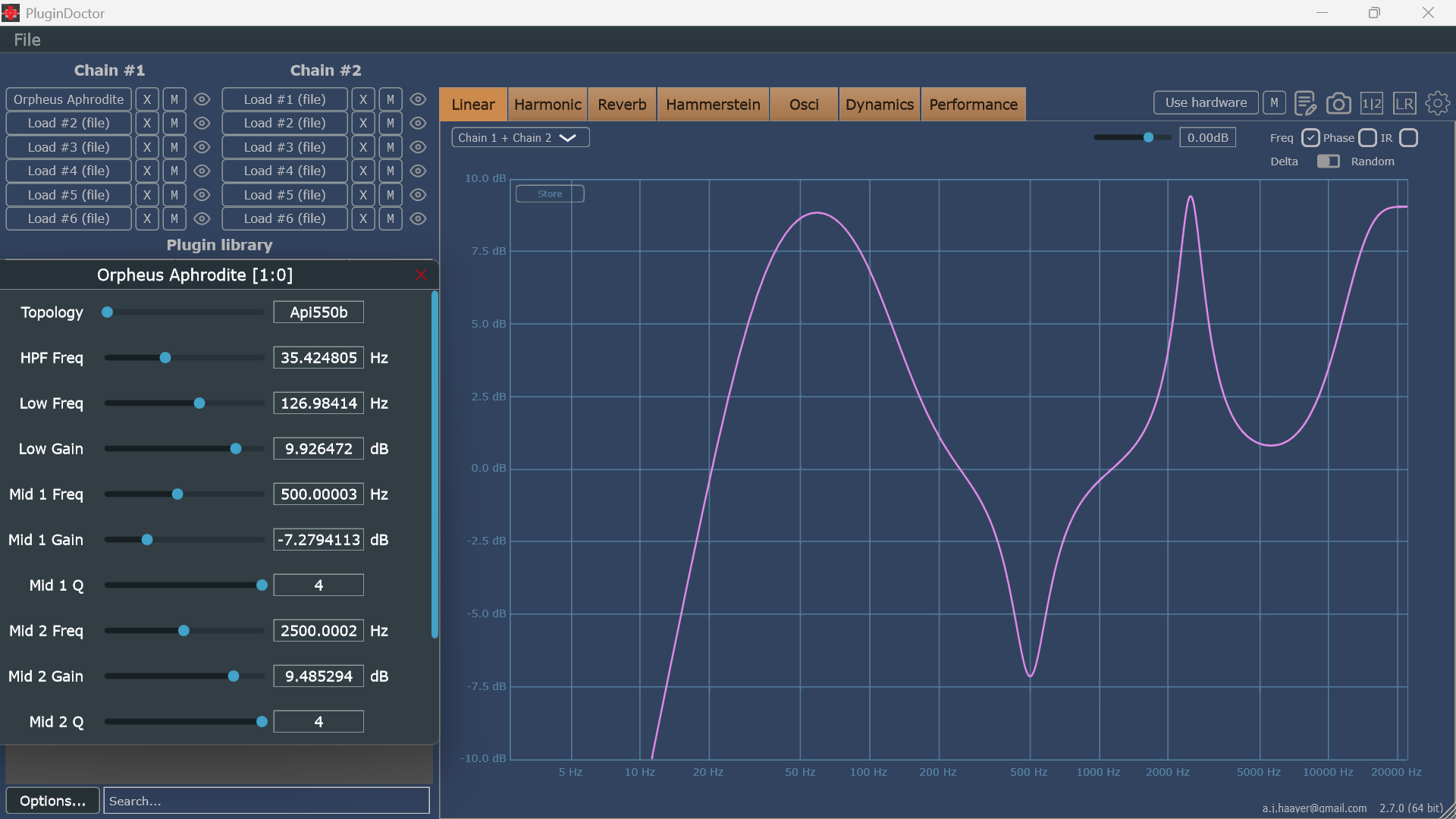
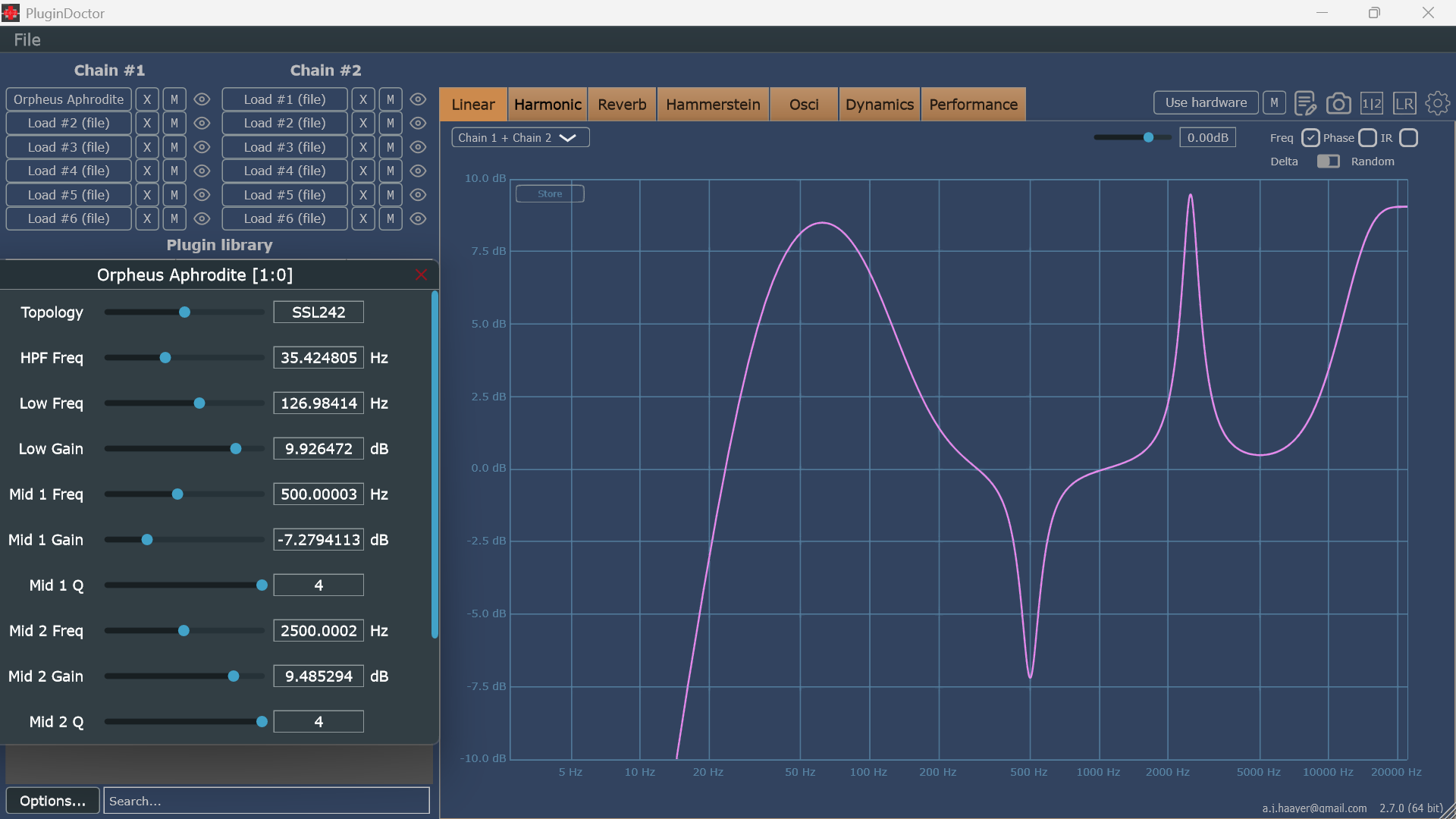
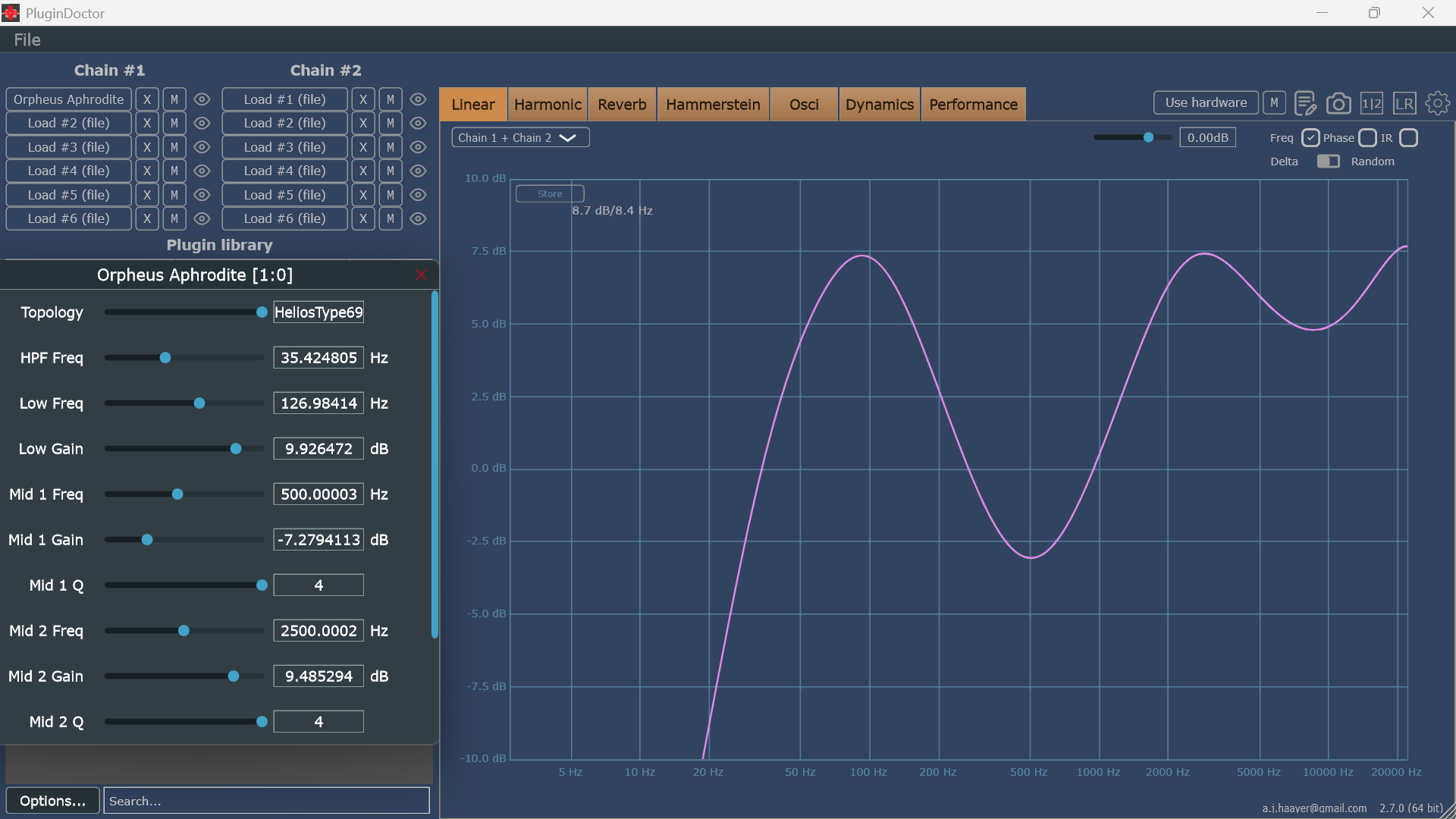
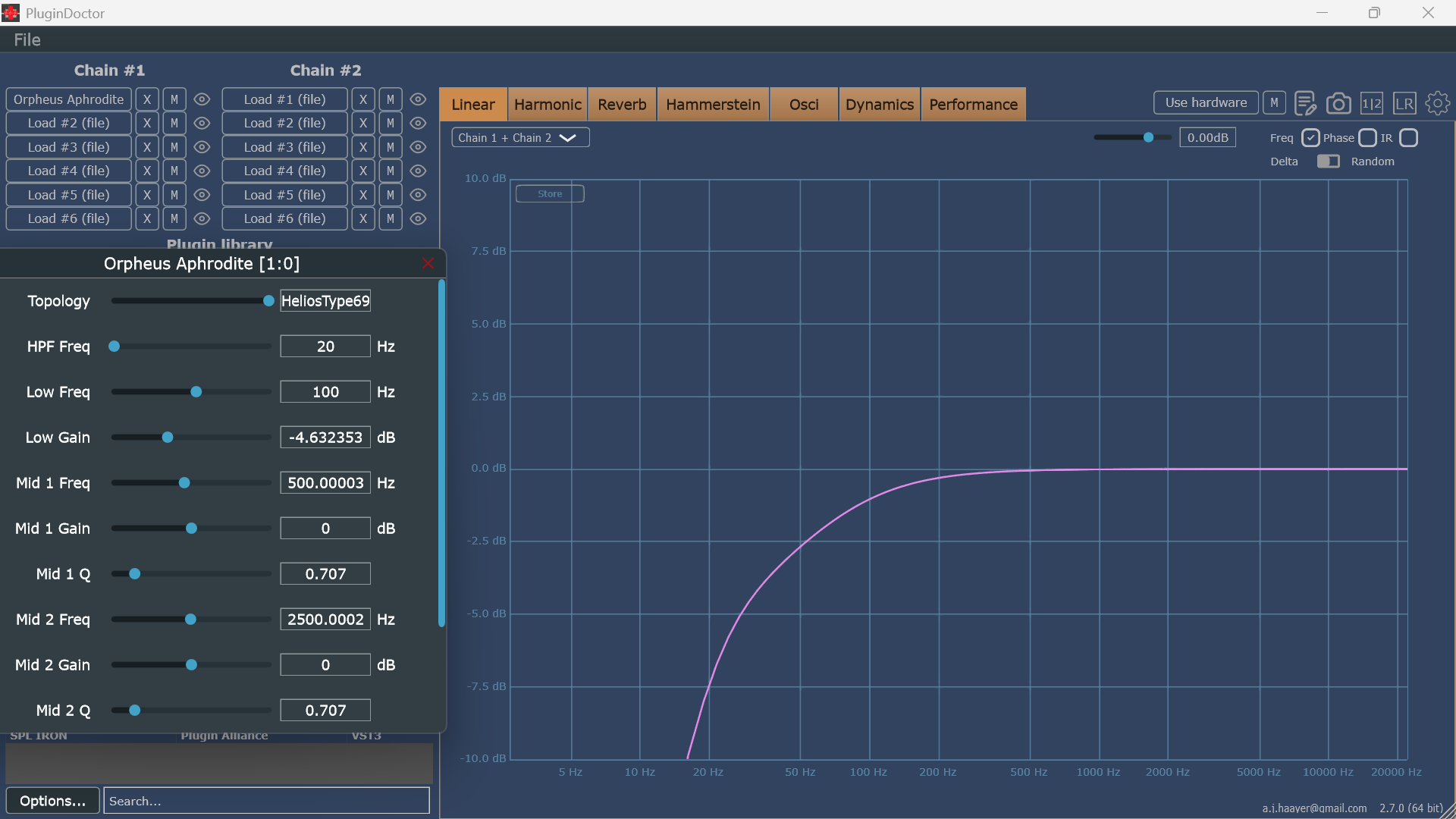
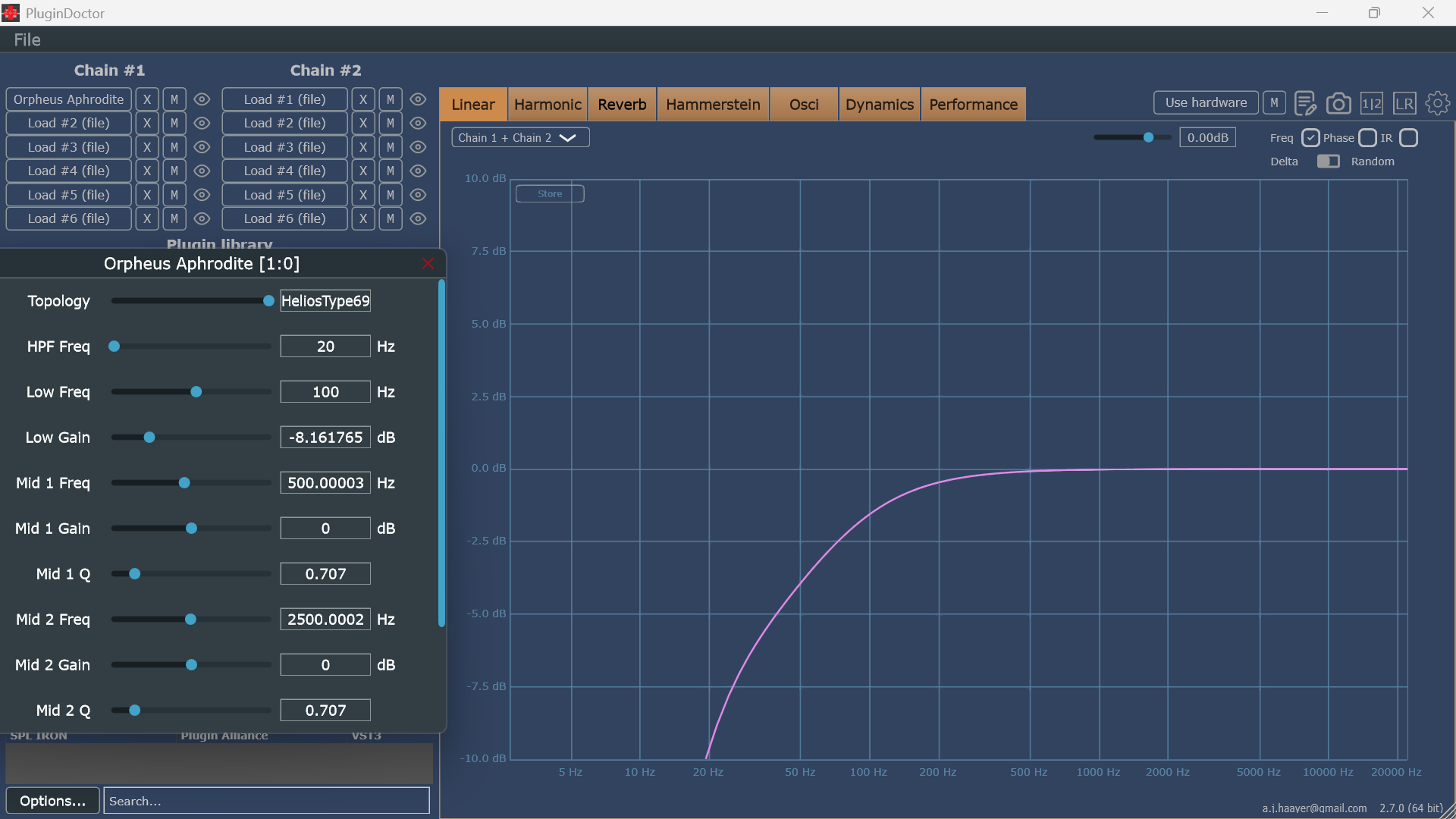
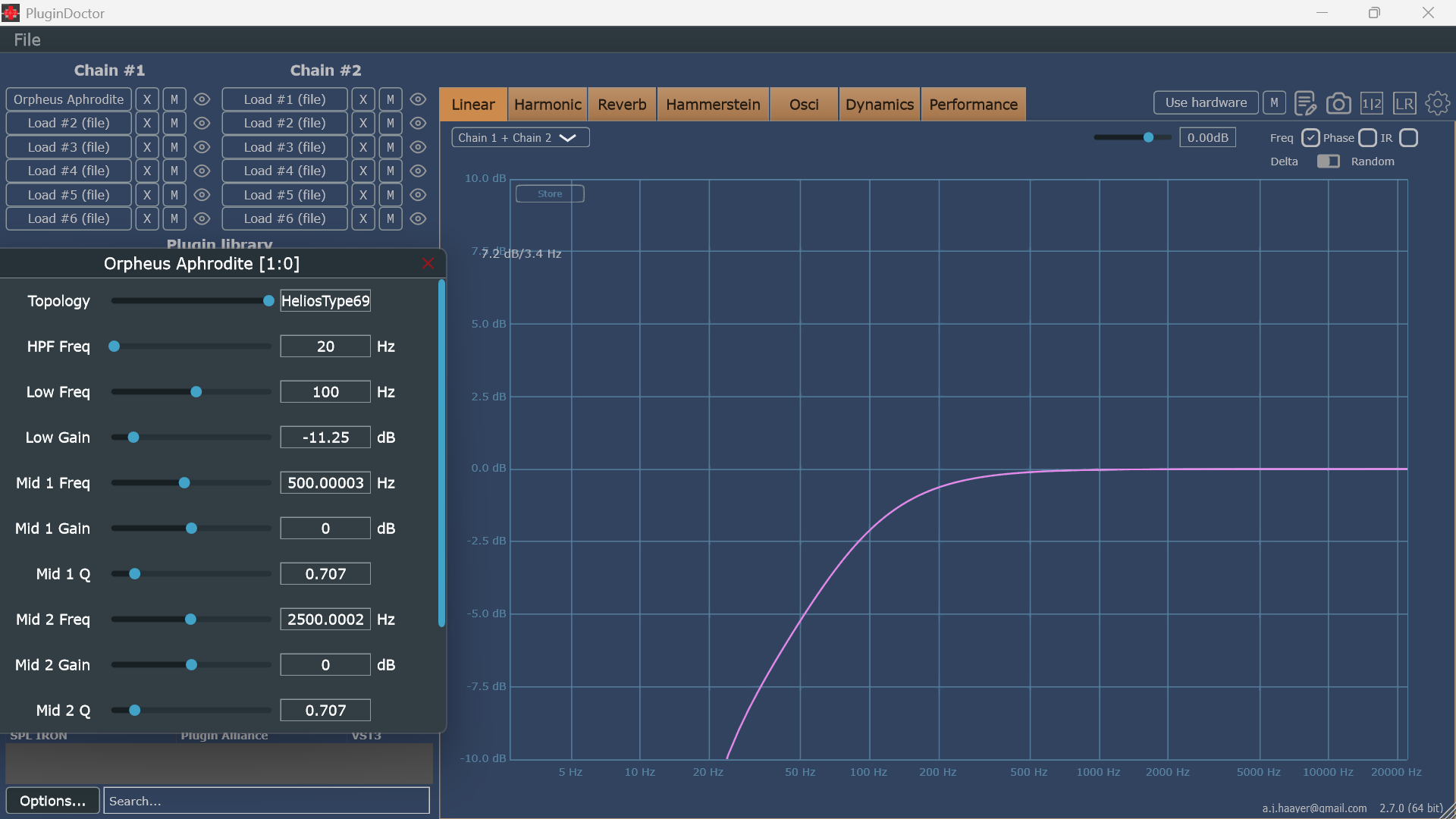
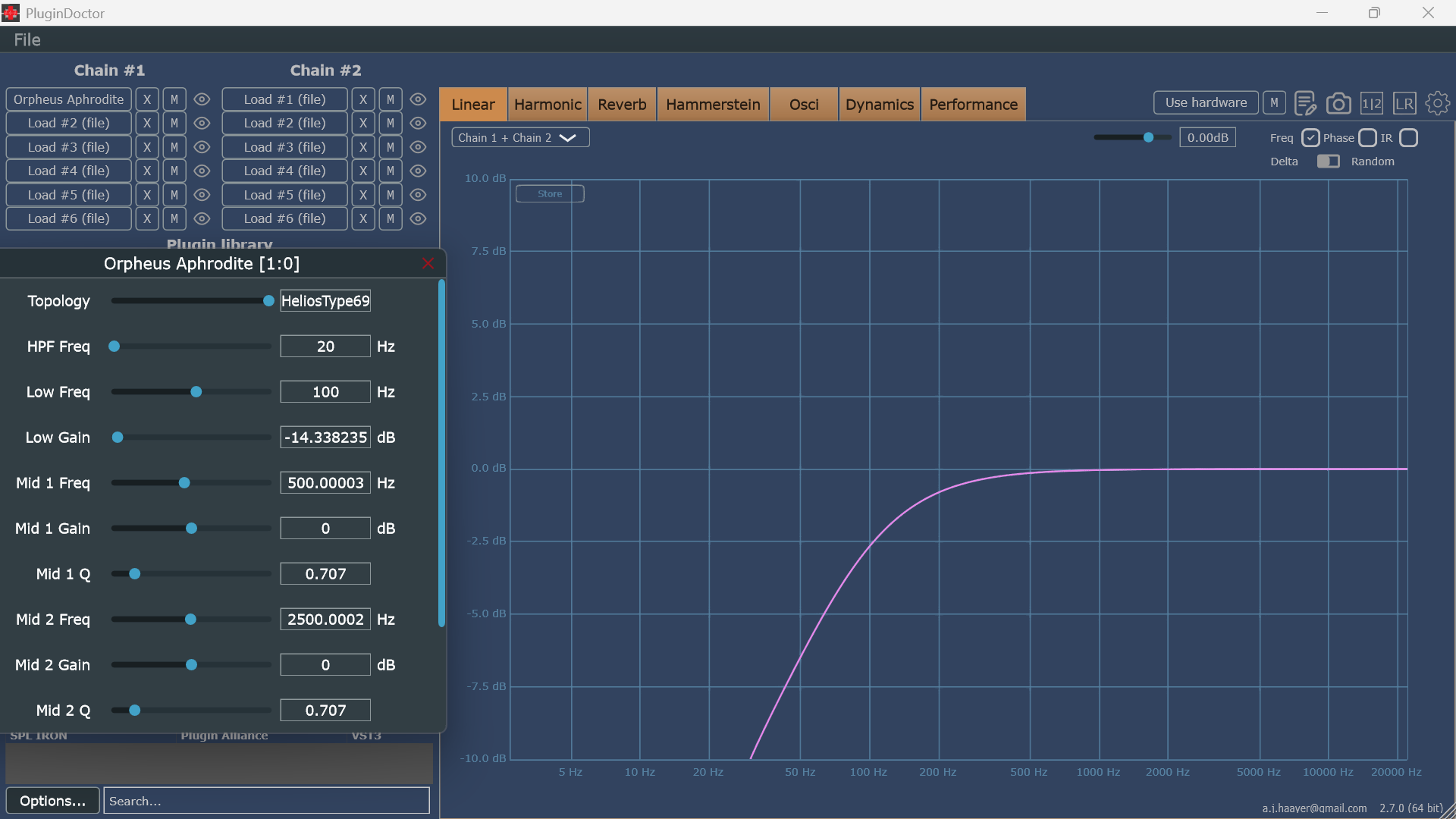
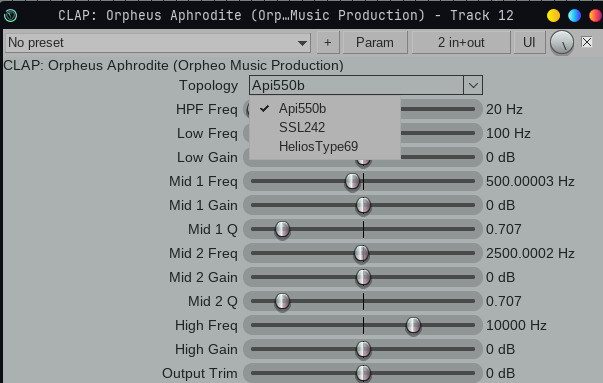
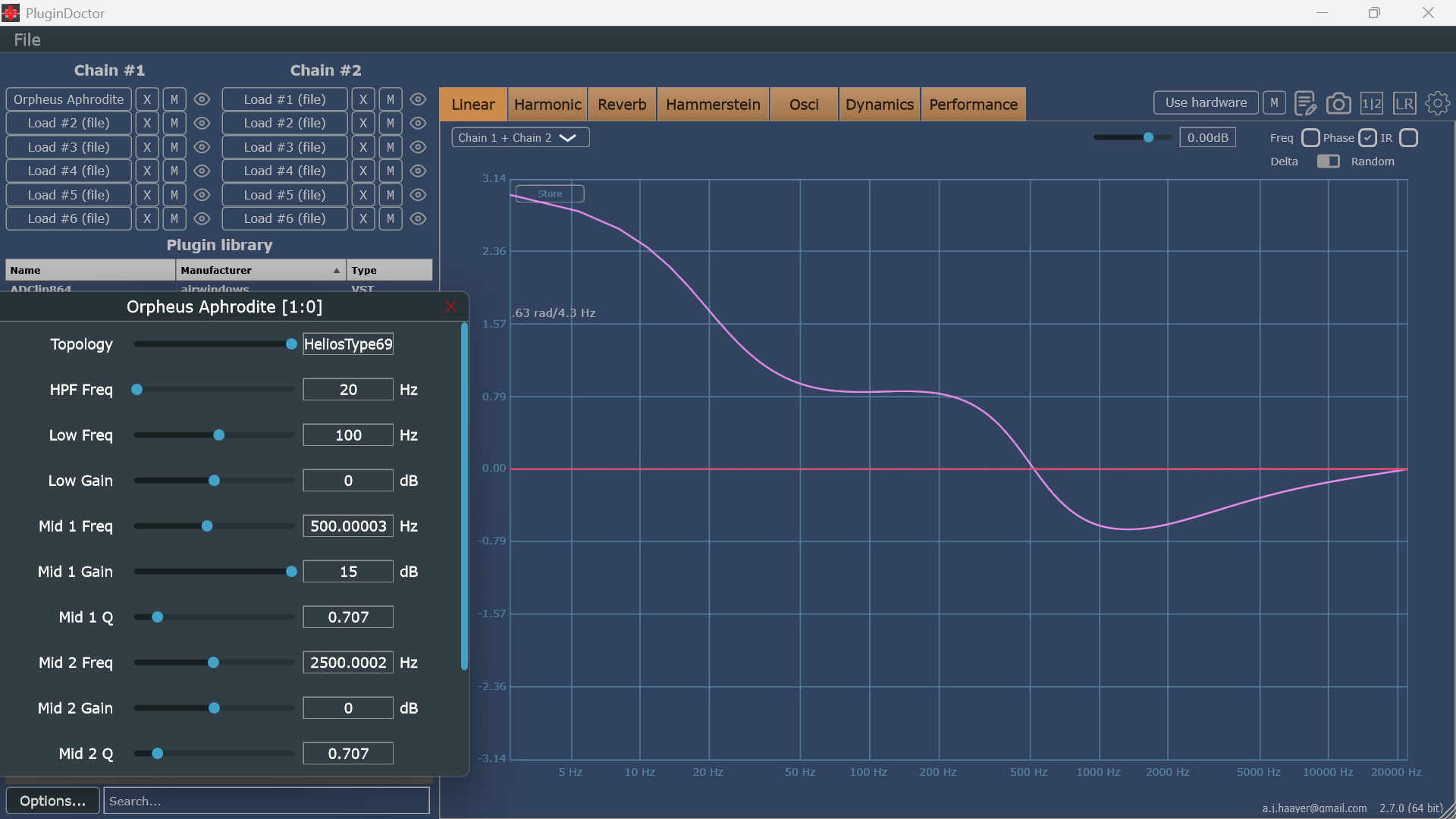
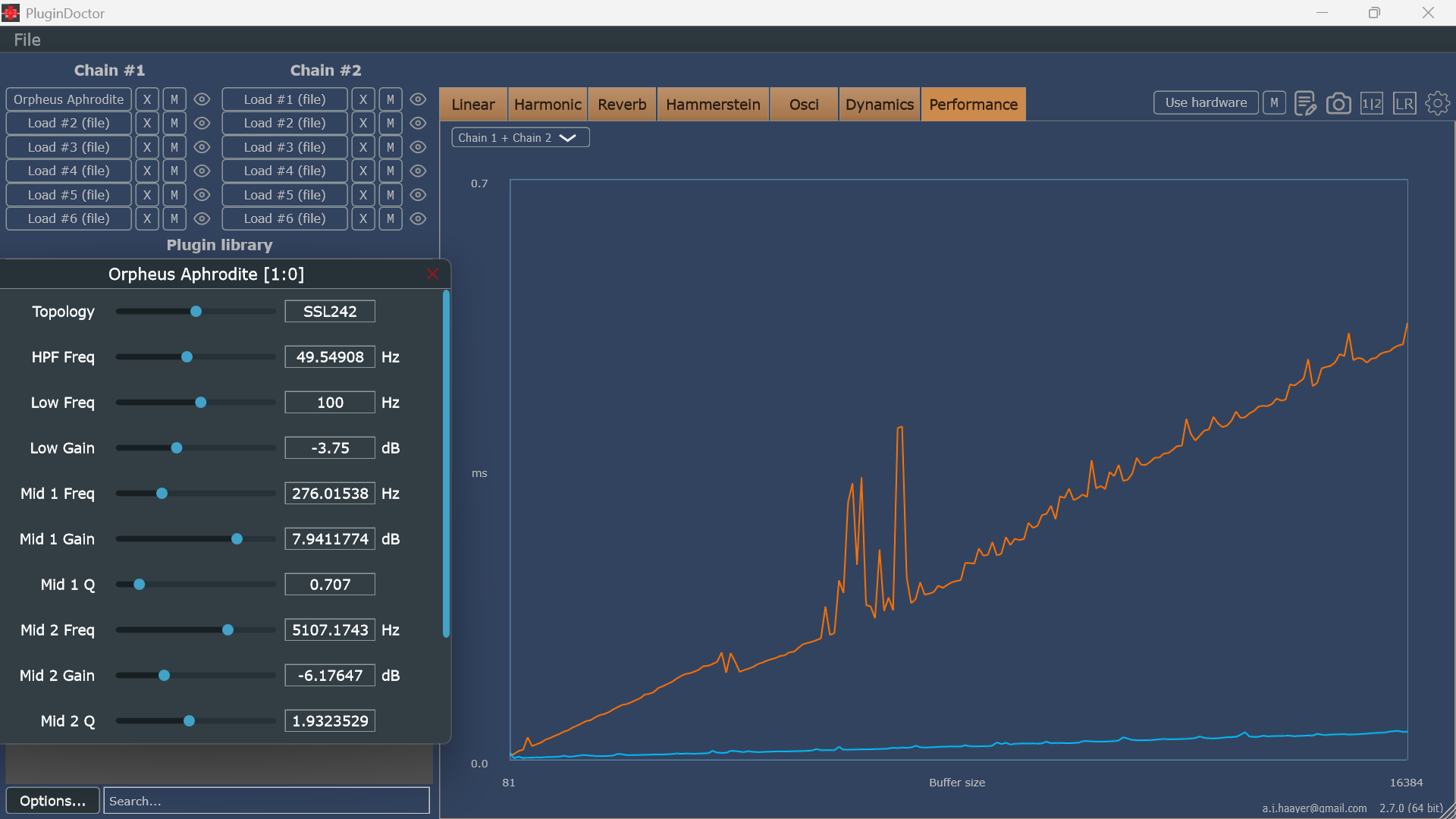
Orpheus Aphrodite executes dynamic filter coefficient recalculation per sample block. Switching console topologies via the host parameter does not load pre-rendered impulse responses or static convolution kernels. It alters the active coefficient mathematics directly, preserving pure minimum-phase tracking, zero algorithmic latency, and absolute numeric precision.
Bandwidth responds dynamically to gain depth. Gentle 2 dB adjustments maintain broad, transparent curves for tonal shaping. Pushing into aggressive ±12 dB territory narrows the filter skirt automatically into focused corrective shapes without requiring a secondary Q control.
Filter bandwidth remains locked and symmetrical across all boost and cut depths. This delivers surgical isolation and constant band separation, preserving adjacent frequency relationships regardless of how heavily a band is driven.
Models passive R/C/L inductor curve interactions. Mid bands exhibit authentic musical resonance, while the low-cut circuit accurately models the physical console's stepped inductor taps at -3 dB, -6 dB, -9 dB, and -12 dB instead of a generic continuous slope.
- First Clean Helios
- Unlike existing emulations that force static line hum, preamp clipping, and heavy convolution kernels, Aphrodite isolates the raw Helios Type 69 inductor curves into clean, responsive filters
- Topologies
- Dynamic switching between American Proportional-Q (API 550b), the surgical SSL 242 Black Knob console response, and vintage Helios Type 69 filter shapes
- Transient Preservation
- Phase-accurate frequency shaping with zero added distortion, CPU drag, or latency (0 PDC)
- Subsonic Clean
- Topology-matched high-pass filtering (18 dB/octave on SSL 242, 12 dB/octave on API 550b and Helios) to clear subsonic rumble
Here at Orpheo, we believe in making music tools for everyone. If you feel like these have brought value to your sound or saved you time in your workflow, tossing a nug or dollar into our jar helps keep development rolling and our heads a lil bit more sane!
Tip To Help Add More Curves To The World →Technical Specifications
Engine Details
- Filter Engine
- SIMD-optimized Direct Form II Transposed biquad filters
- Console Topologies
- API 550b (Proportional-Q), SSL 242 (Black Knob), Helios Type 69 (Clean Inductor)
- Subsonic Filter
- 18 dB/octave on SSL 242, 12 dB/octave on API 550b and Helios
- Latency
- 0 samples (Zero PDC)
- Formats
CLAPandVST3native (Linux, Windows, macOS)- UI Framework
- 100% GUI-less with host-rendered DAW menus and sliders
- License
- Mozilla Public License 2.0 (MPL-2.0)
macOS Gatekeeper Notice
Binaries are unsigned. Load the plugin once in your DAW, navigate to System Settings > Privacy & Security, and click Open Anyway
Alternatively, open the Terminal app and strip the quarantine flag manually:
xattr -dr com.apple.quarantine ~/Library/Audio/Plug-Ins/CLAP/*